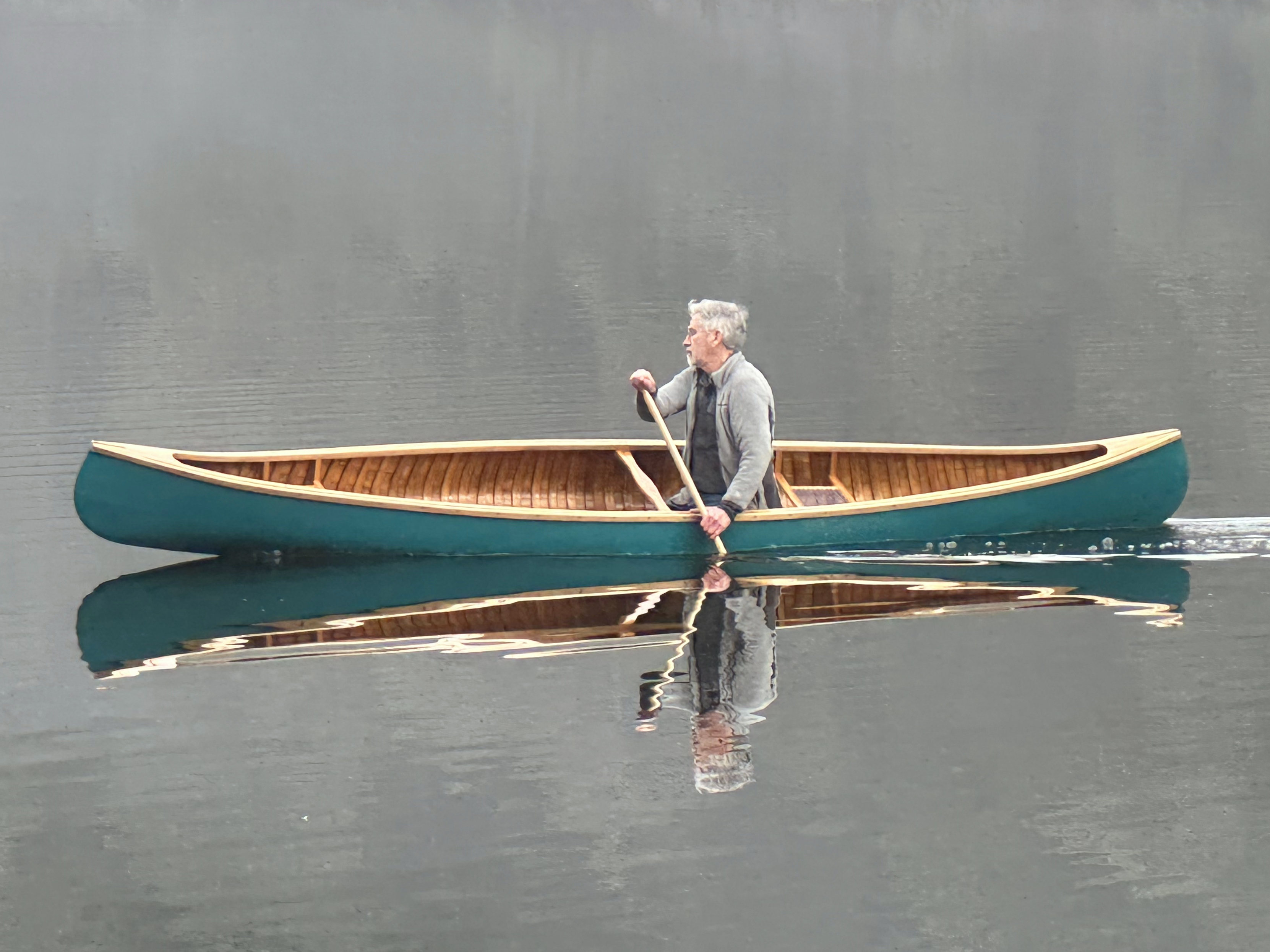
About a decade ago, my friend Alex sent some pictures of a forlorn wood canvas boat that he found while helping to clean out a basement. The boat was a give-away. He asked if I was interested. It looked sad and dusty. It’s canvas was gone but otherwise seemed in pretty good shape. I had way too much going on at the time but I had space for it in our basement and I figured that I could get around to it eventually. So I said yes.
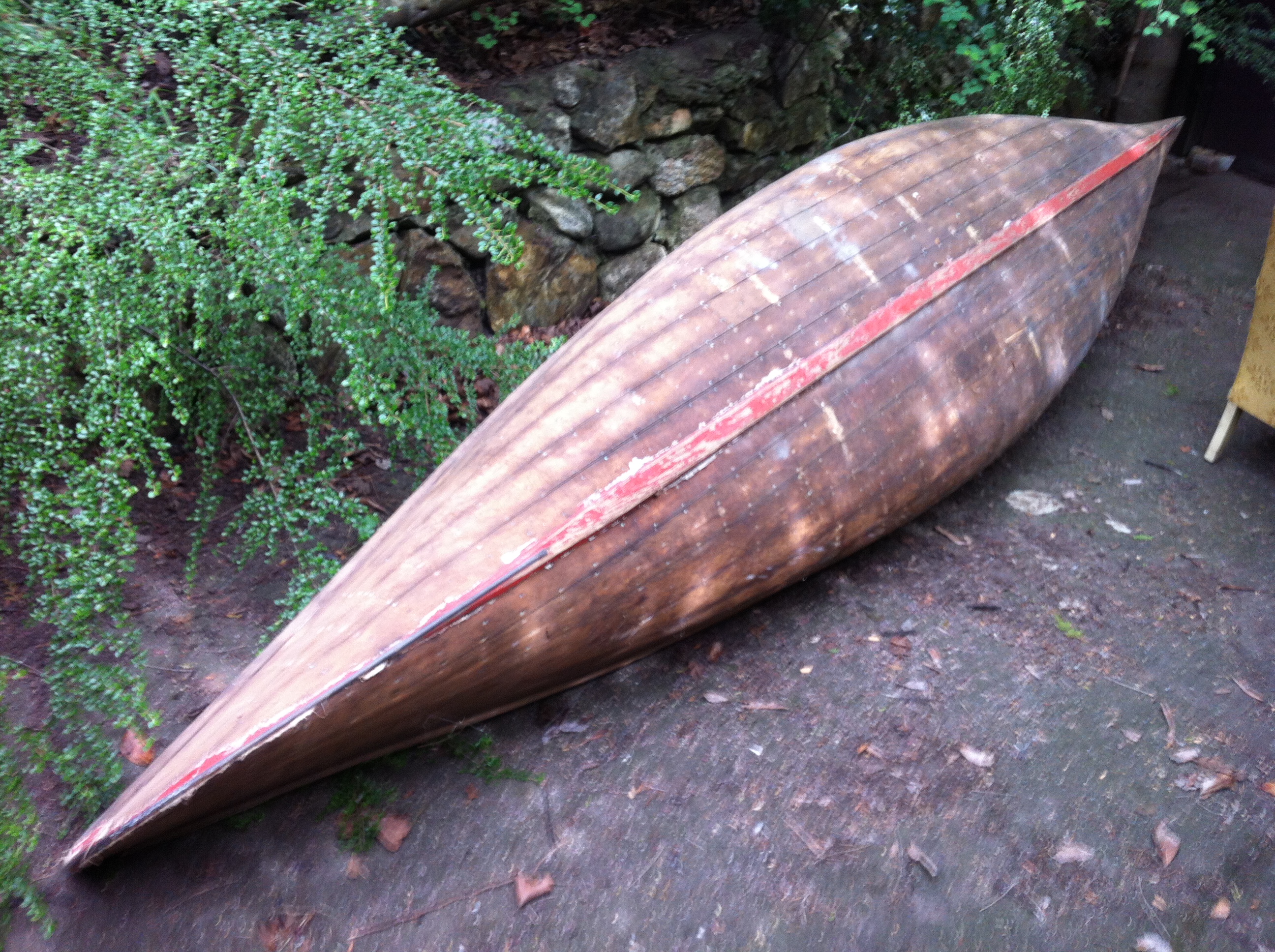
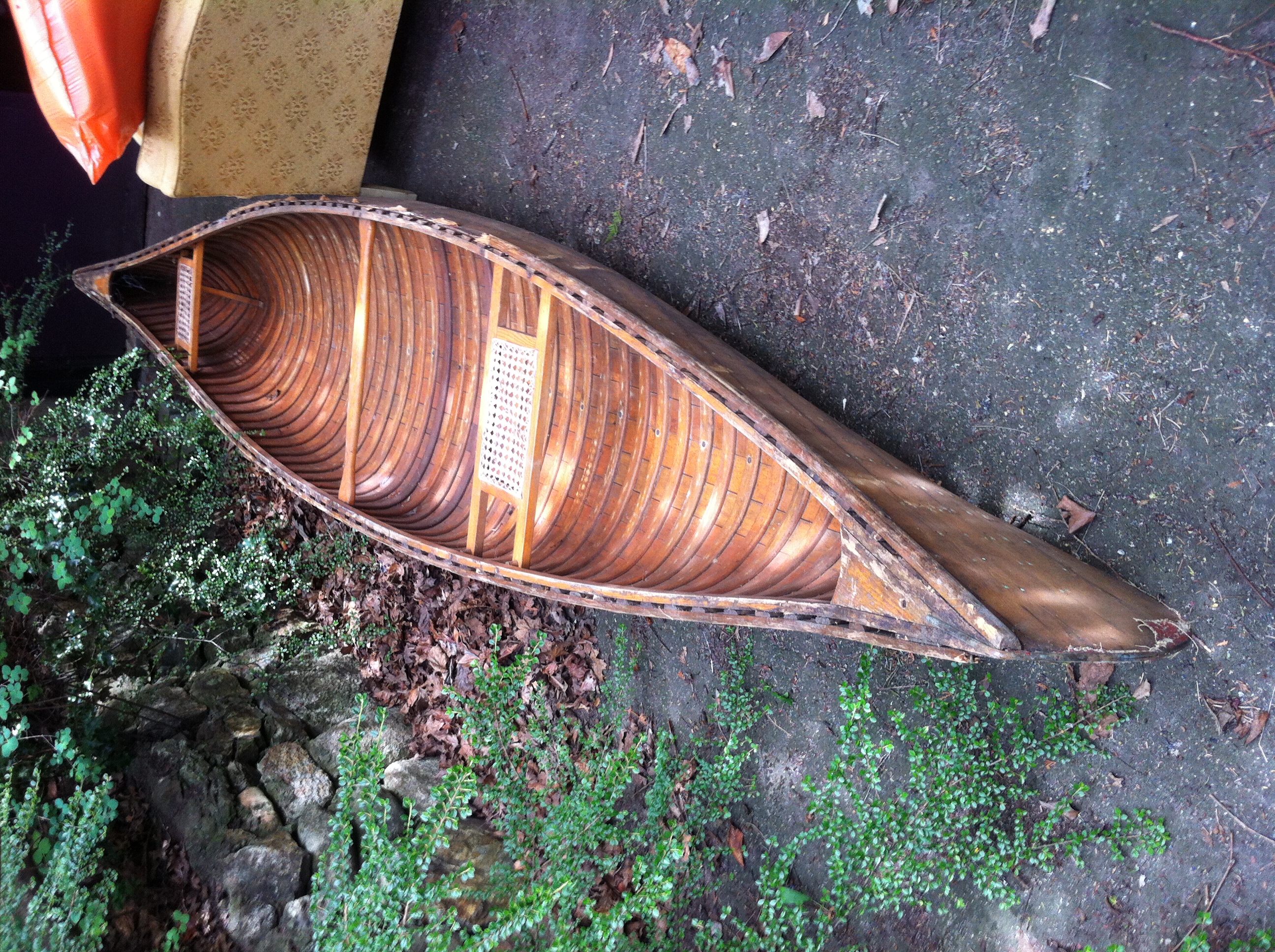
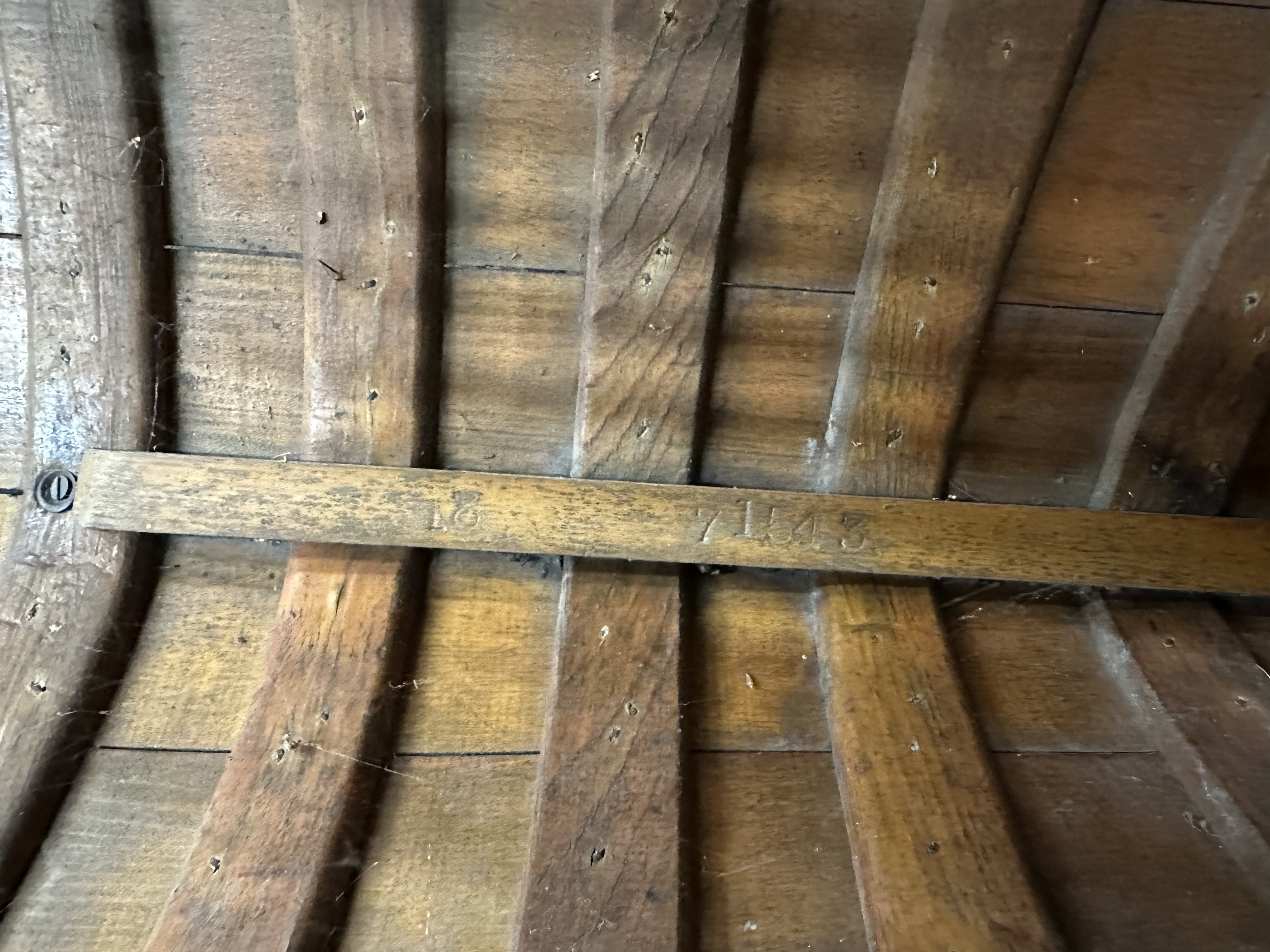
The shape of the decks suggests that its a Chestnut canoe. It has a serial number on the stem but the Chestnut company records were lost long ago in a factory fire. Fortunately there are a few old catalogs available on-line. The 1960 Chestnut Catalogue describes a boat with measurements that match this one: 15’ long, 12” deep, 33” wide, with 1 1/2” ribs. So this appears to be the Chum model. One reference suggests that the “16” at the beginning of the serial number means that it was built in 1961. But that’s far from certain.
This canoe is light and has beautiful lines. It does not have the broken ribs and planks that you would see in a boat that has been heavily used. By most accounts the Chum is not an ideal tandem boat as it’s a bit small. But it is well regarded as a solo boat and would probably work fine for a lighter pair of paddlers. That’s ok by us since we’re pretty light and besides we already have a 16’Chestnut Pal which is a great tandem boat.
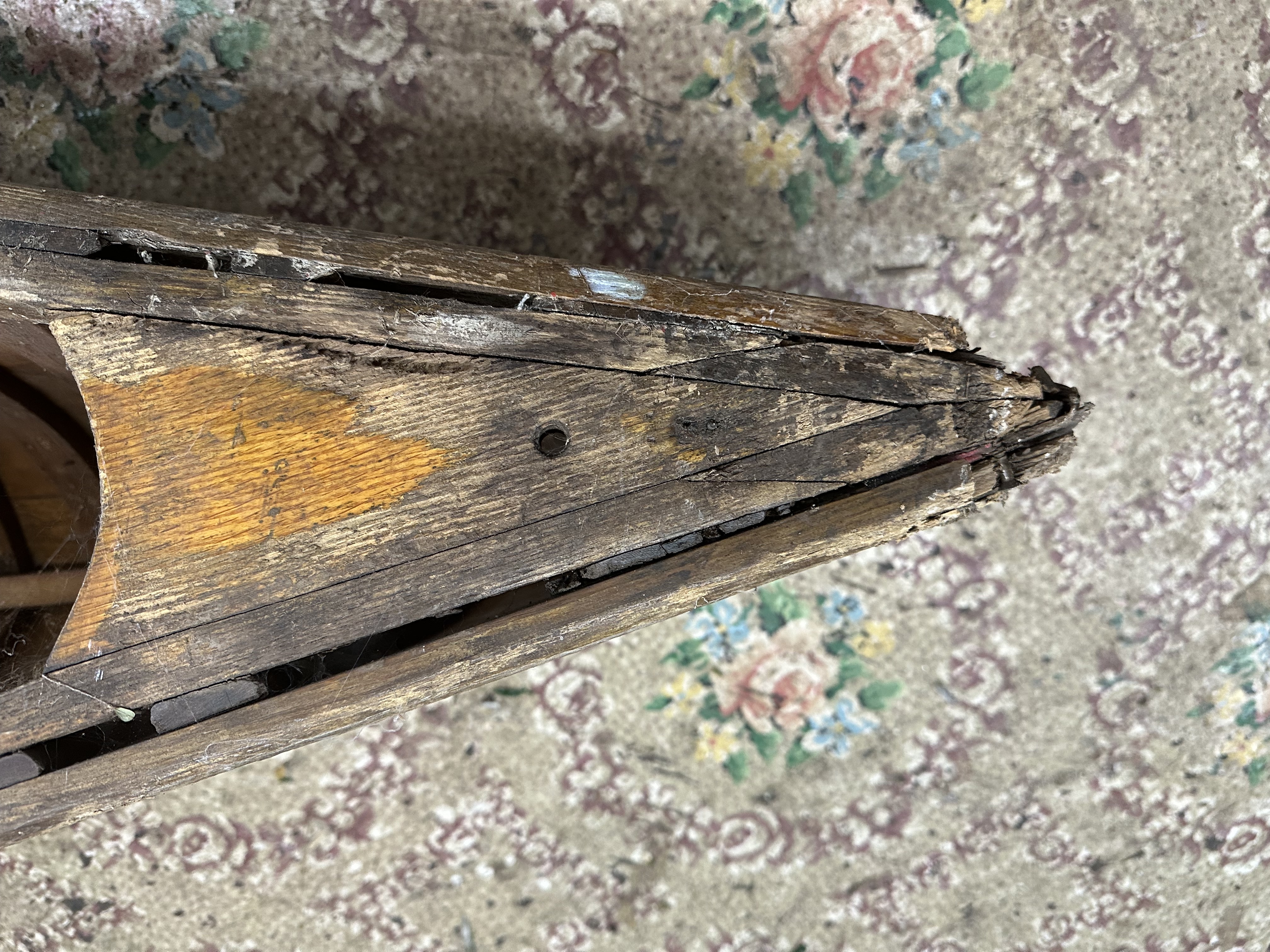
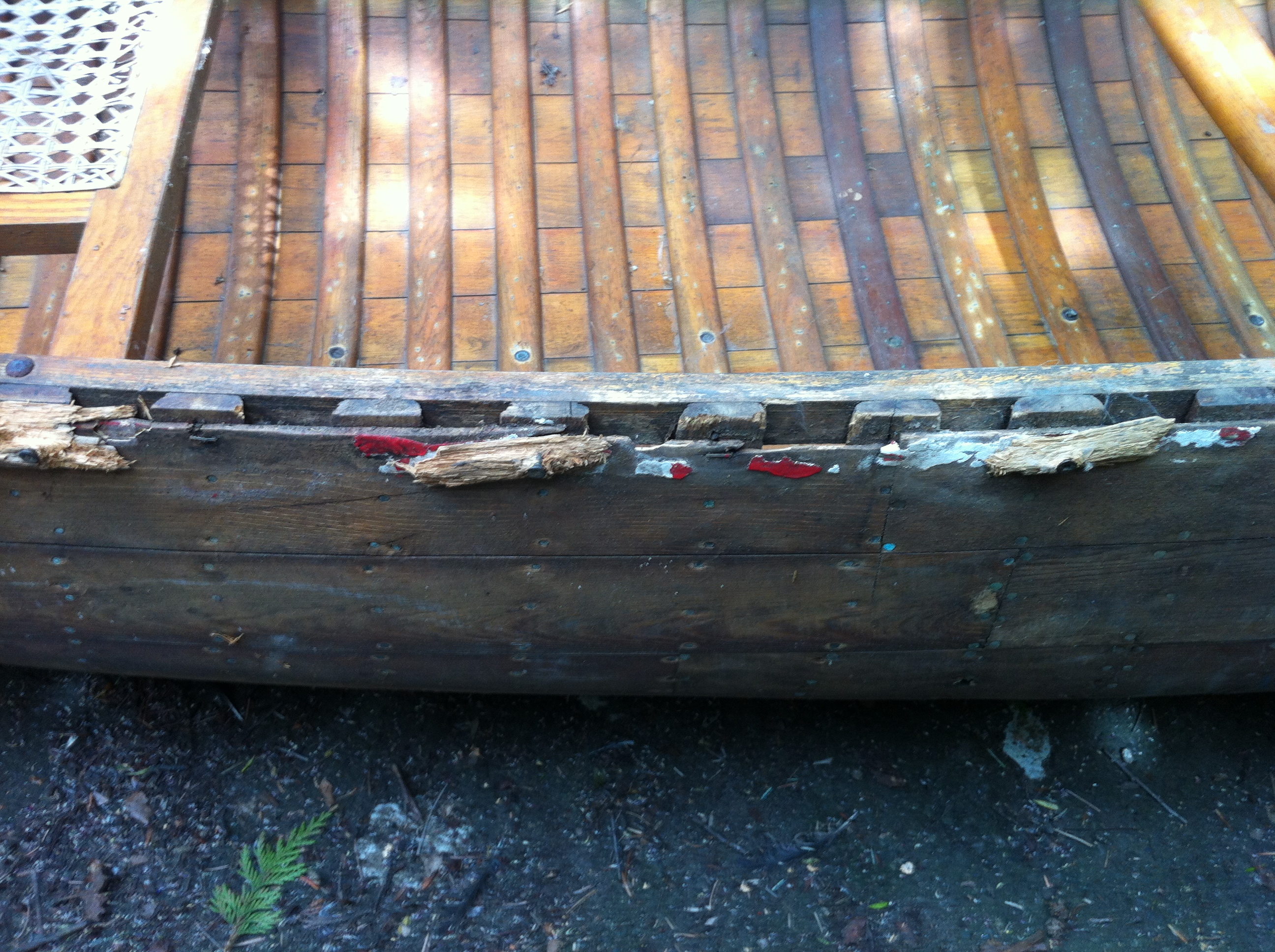
The canoe had been restored at least once before. The inwales had been patched at the decks and two ribs had been replaced. The outwales had probably also been replaced. Judging by the corrosion on the metal parts this boat had been paddled in salt water and not well rinsed afterwards. The boat did not show much damage from use but it had clearly not been stored well.
I started by removing the seats and proceeded to strip the old varnish and clean the wood. It was wet messy work but a fun diversion on warm August days.
The Inwales
Stripping and cleaning the boat gave me a chance to go over it in finer detail. I discovered a couple of broken ribs and some planking that needed to be replaced. The more disappointing discovery was the extent of rot in the inwales. They had to be completely replaced.
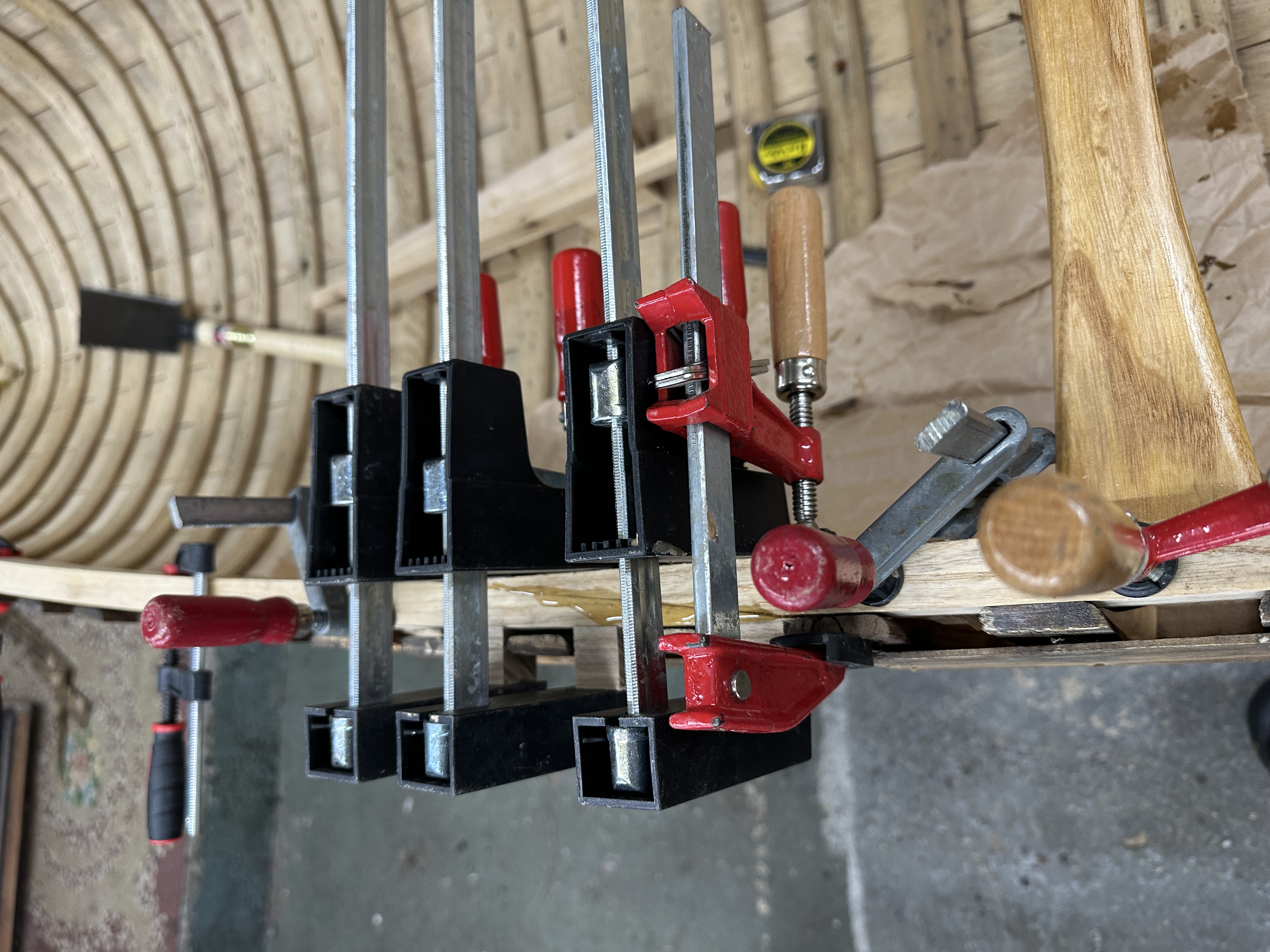
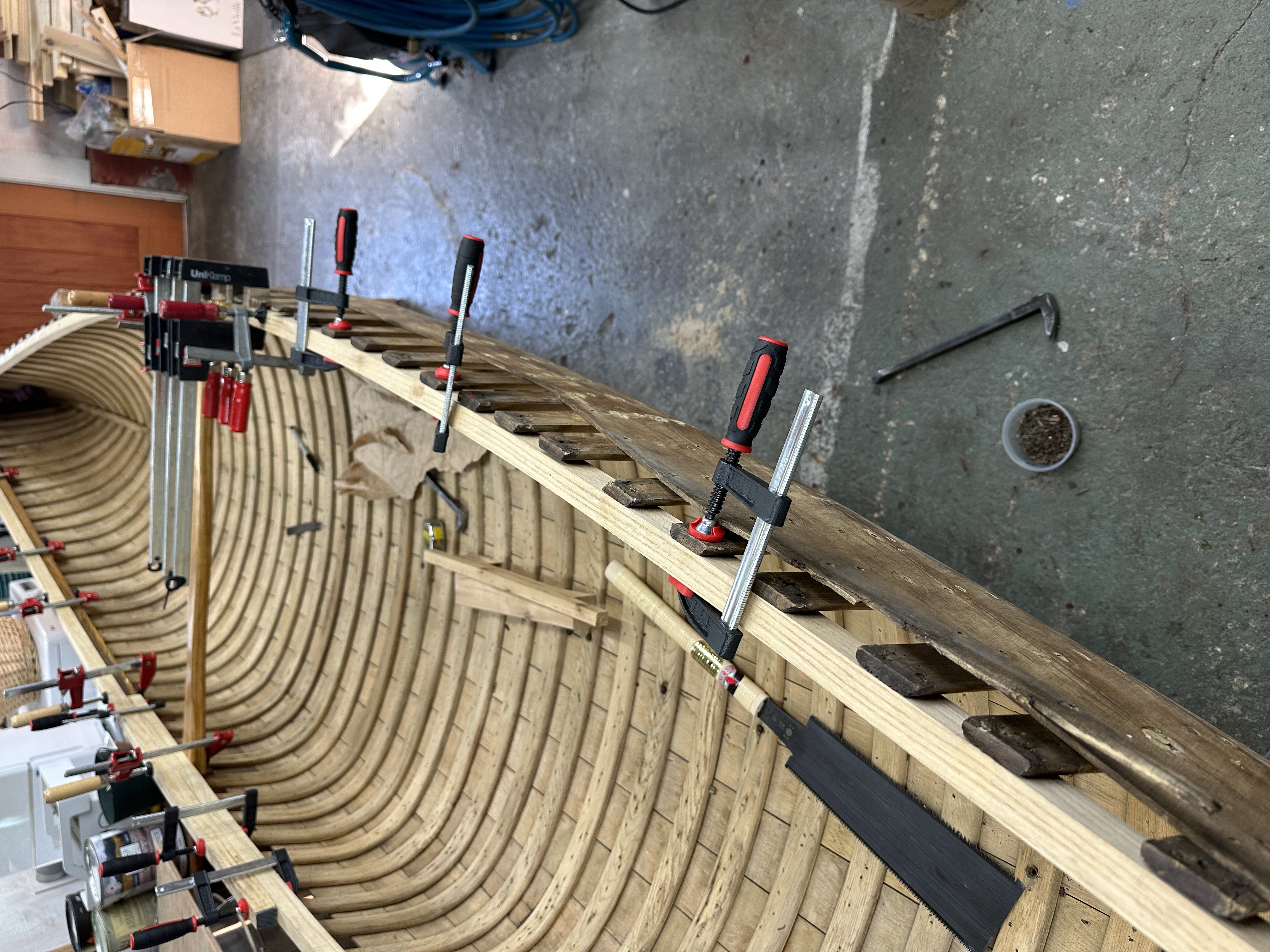
The old inwales were solid enough that I could use them as forms for steam bending new inwales. I had recently learned that 6mil plastic tube is a great altenative to a steam box for steaming long objects. I milled four strips of ash for the new inwale. It would have been great to have had 16’ lengths of ash to work with, but no such luck. I would have to scarf shorter pieces together. The wood was soaked for a couple of days before it was steam bent, two segments at a time, using the old inwales as a form.
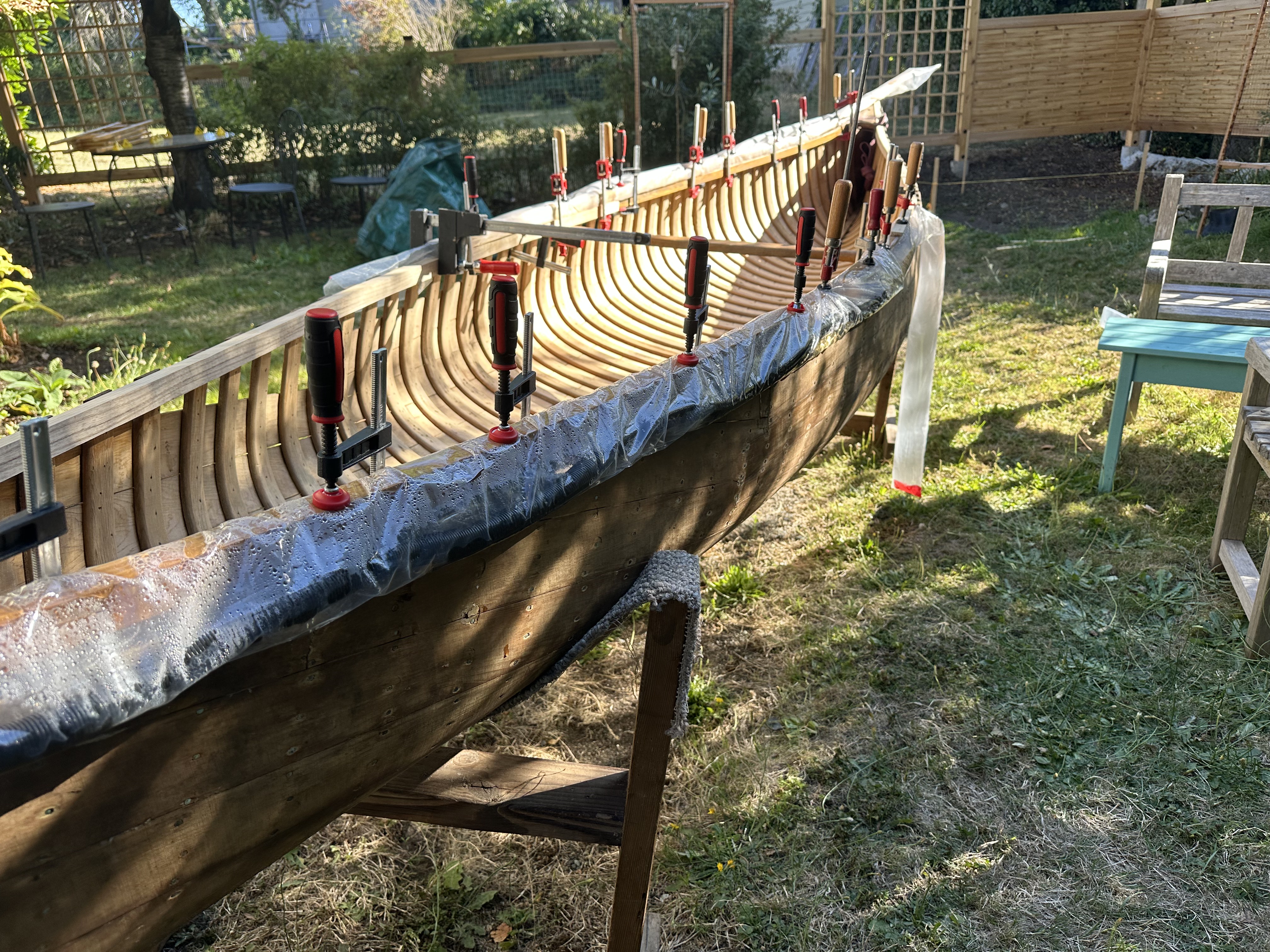
Once the new inwales were bent and dry the surgery began. One quarter at at time the old inwales came out and the new inwales were nailed into place. Segments were scarfed together at the middle of the canoe.
Replacing the inwales provided a lesson in the magic of a canoe. Without the inwale the ribs and planks were very floppy, and the old inwales were rotten and fragile. In combination though, the ribs, planks and and old inwale were solid.
Ribs, Planks and Seats
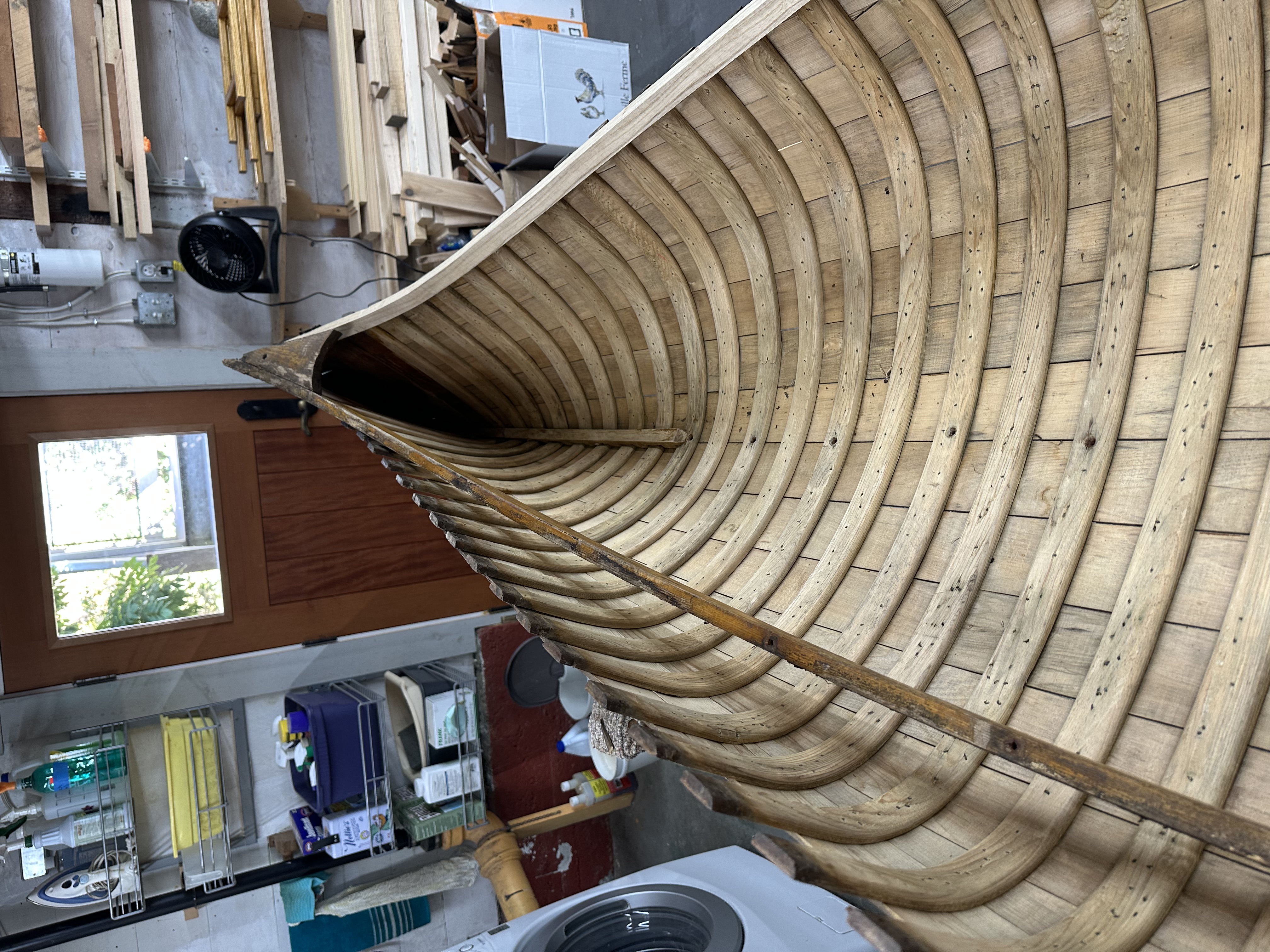
The ribs and planks were mostly in good shape. I replaced two broken ribs and a small amount of planking. I also repaired some rotted rib ends. An earlier repair left the canoe with two red cedar ribs and some red cedar planking. I was tempted to remove that material just because it looked out of place against the original white cedar and the new yellow cedar repairs. But I decided to leave well enough alone.
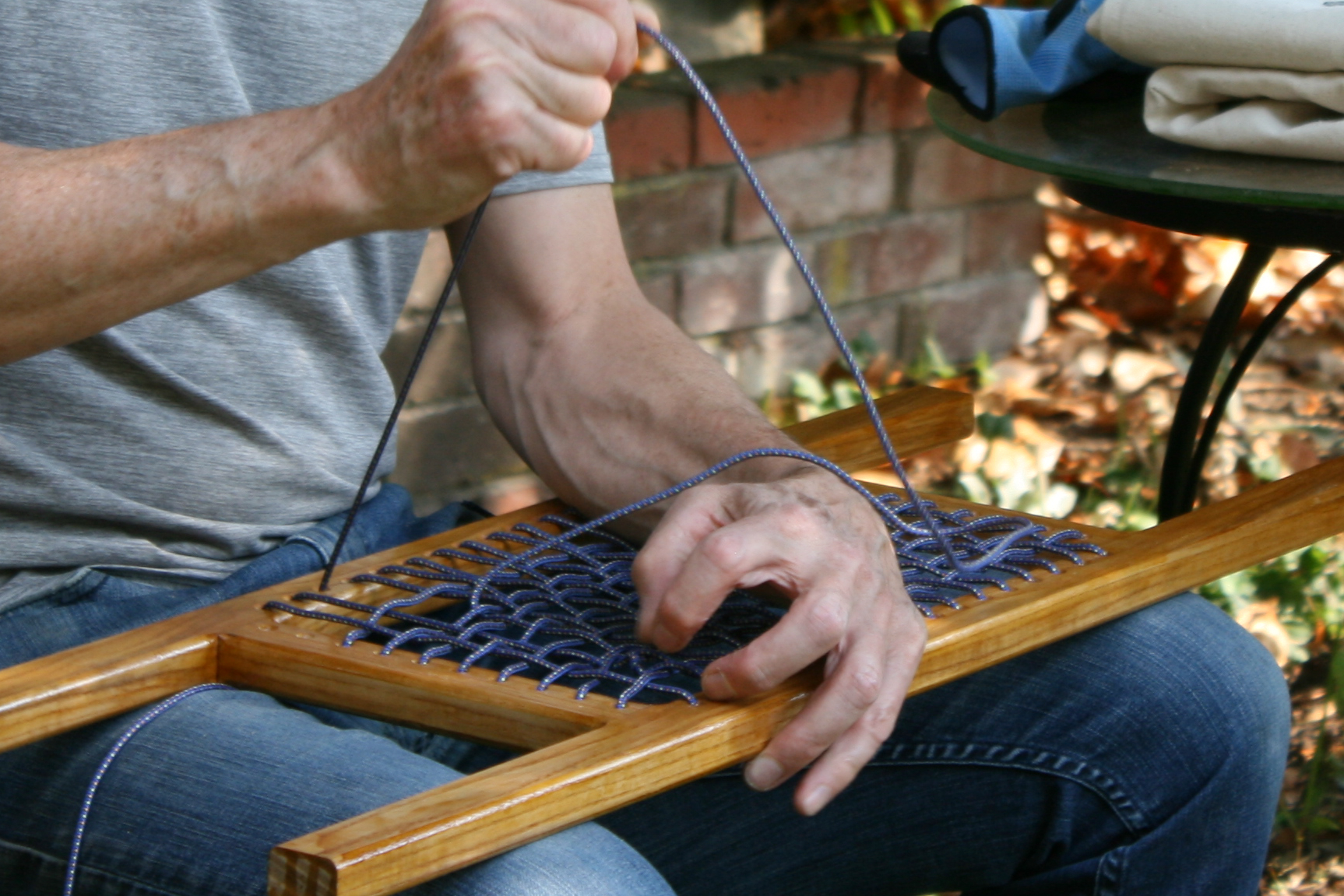
Seats are often the first thing to go on a canoe. Mortise and tenon joints fail, and traditional seat material (cane or babiche) rots and breaks. I like the look of traditional seats but I don’t like the fuss. So I typically use a festool domino for the joints and 3 mil climbing accessory cord for woven seats.
Canvas, Fill and Paint
There were two canoes in the shop through August and Fall 2025. I’ll write about the other boat in a subsequent post. The canoes had different stories, different characters, and different issues. But they both needed new canvas, filler, and paint. Given the amount of fuss and preparation associated with those tasks it just made sense to do them both at the same time. Also, late August was a good time to work in the back yard.
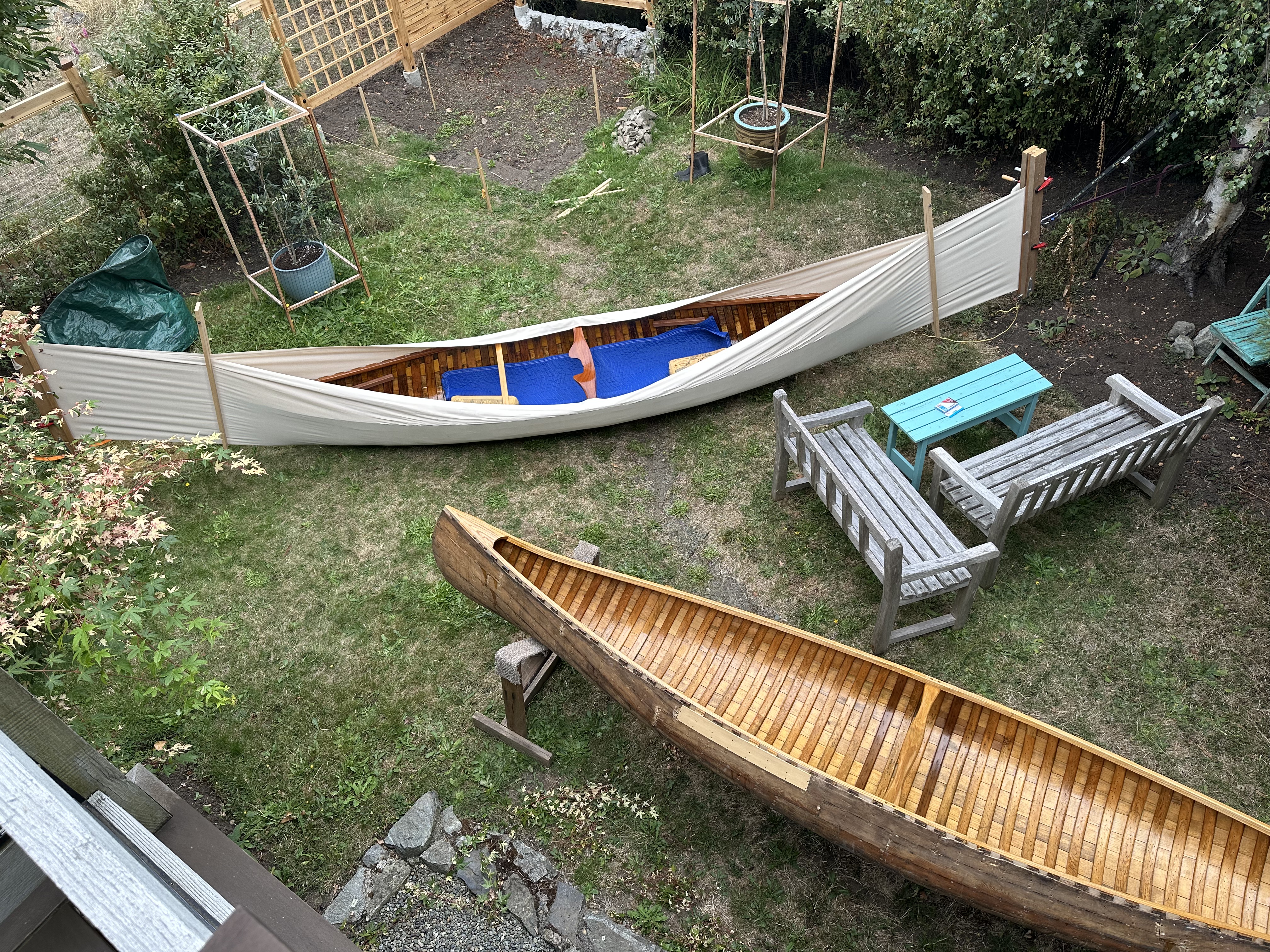
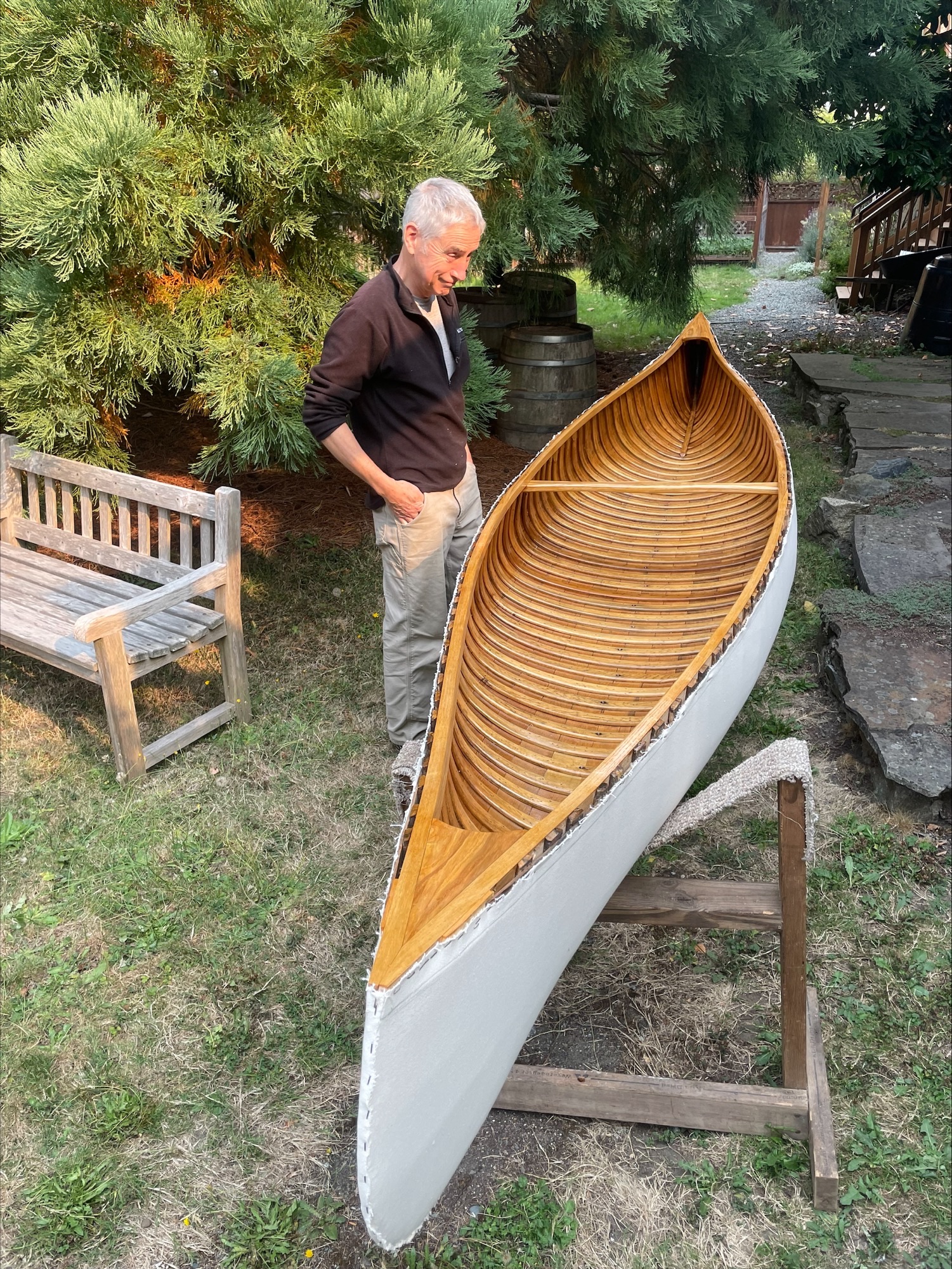
Right:Kim caught me admiring the canoe just after we had finished getting the canvas on it.
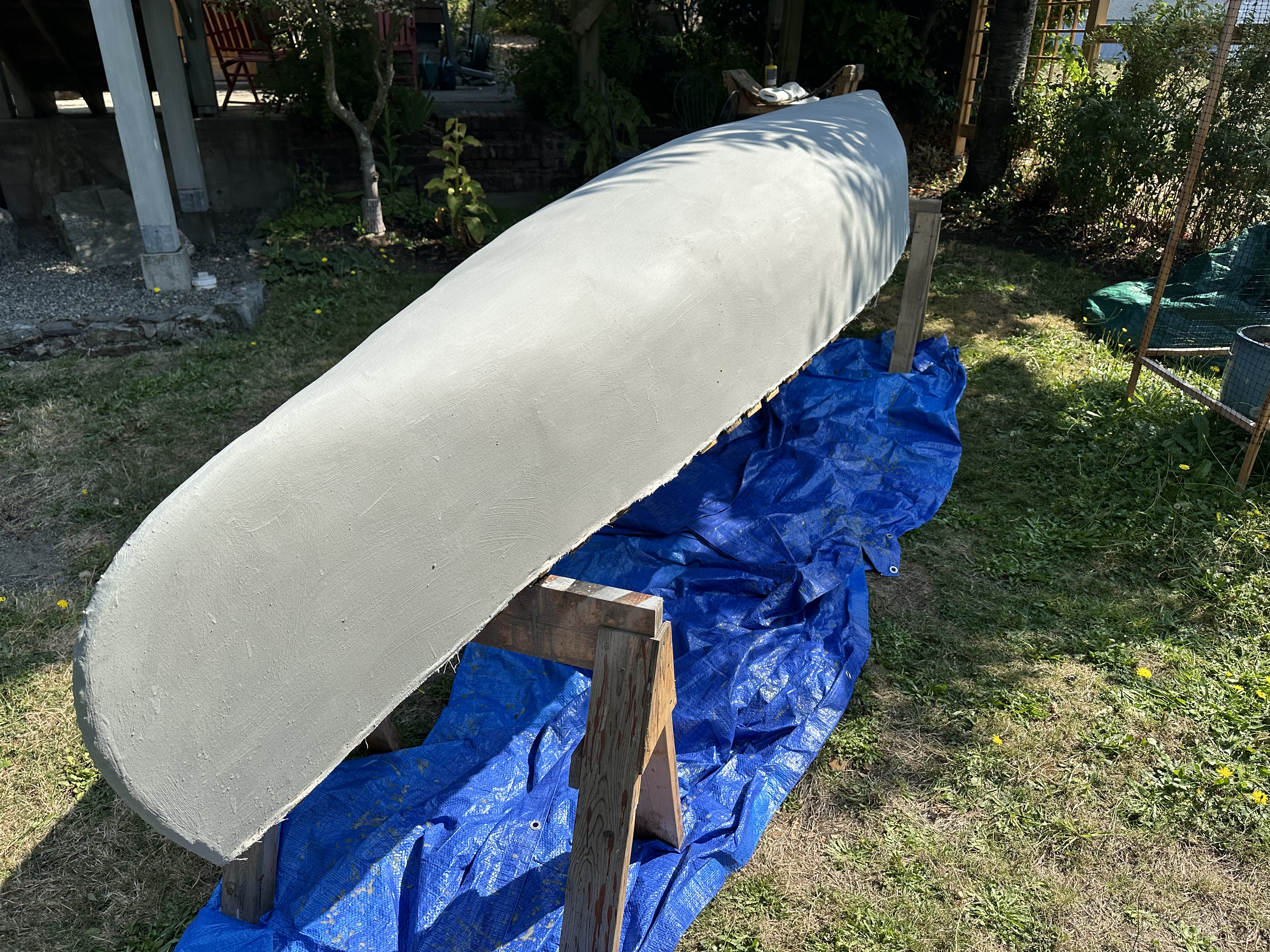
A couple of weeks later it was time to fill the canvas. I mixed up enough filler for two canoes and did them both on consecutive days. This was the first time that I had worked with conventional enamel/oil/silica filler. It’s messy and takes a month or more to cure, but it forms a really hard surface. Later on in the year, as I was sanding and priming the filler, I discovered that I should have taken more care to properly smooth the filler when it was wet. It was a lot of work to fix all the imperfections in the sanding and priming stage.
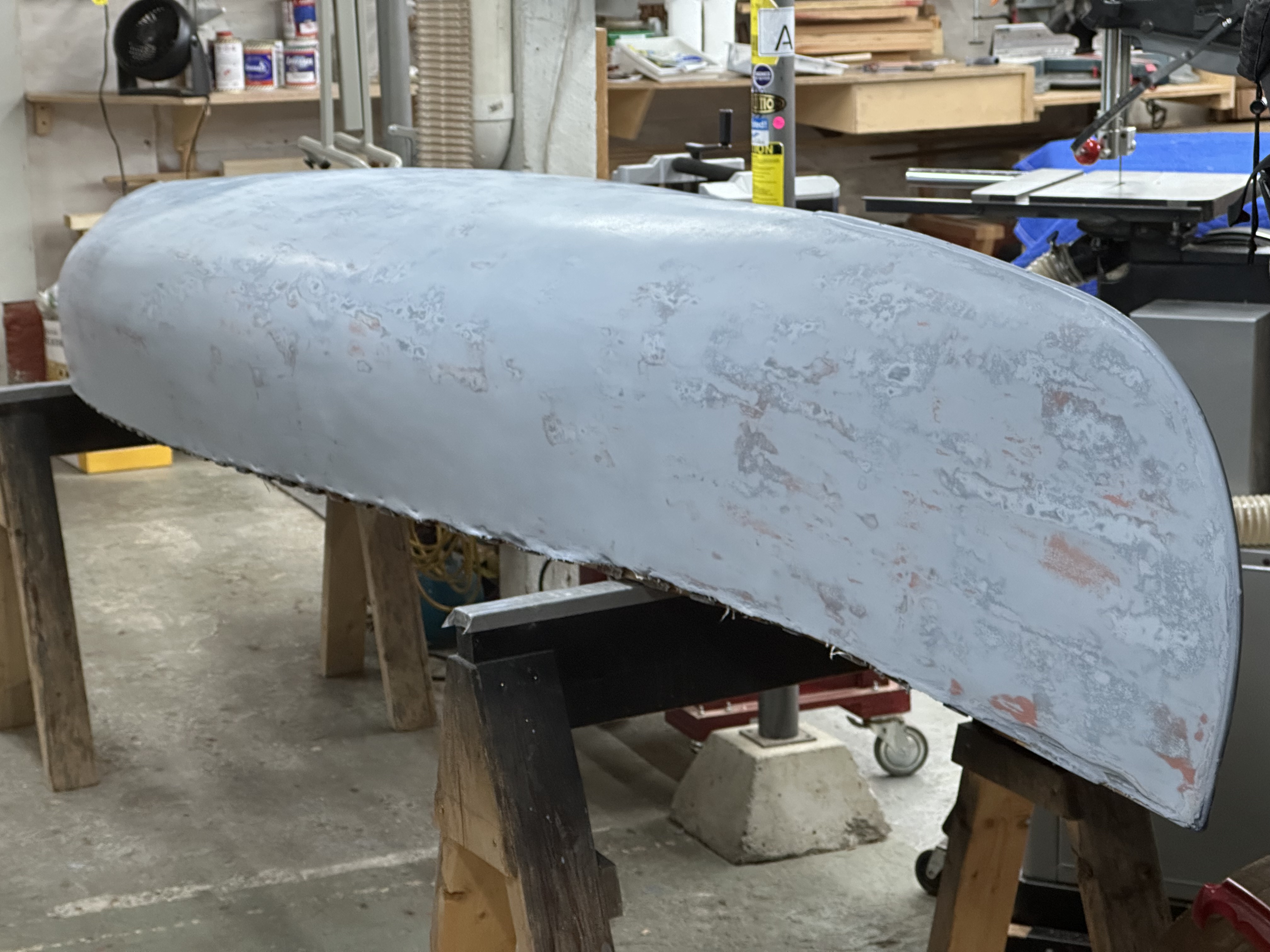
Kim and I spent October in Turkiye with friends and when we got back home it was time for sanding and priming. It took five coats of primer, sikaflex, lots of sanding and even a bit of bondo to get things in shape. But I eventually got there.
In early January I put on the last coat of primer, and a couple of days later on a rare rain-free afternoon Alex and I dragged the canoe out to the driveway, started up the steamer and put the outwales onto the boat. The woodwork was done and all that remained was the paint and some varnish.
Colour

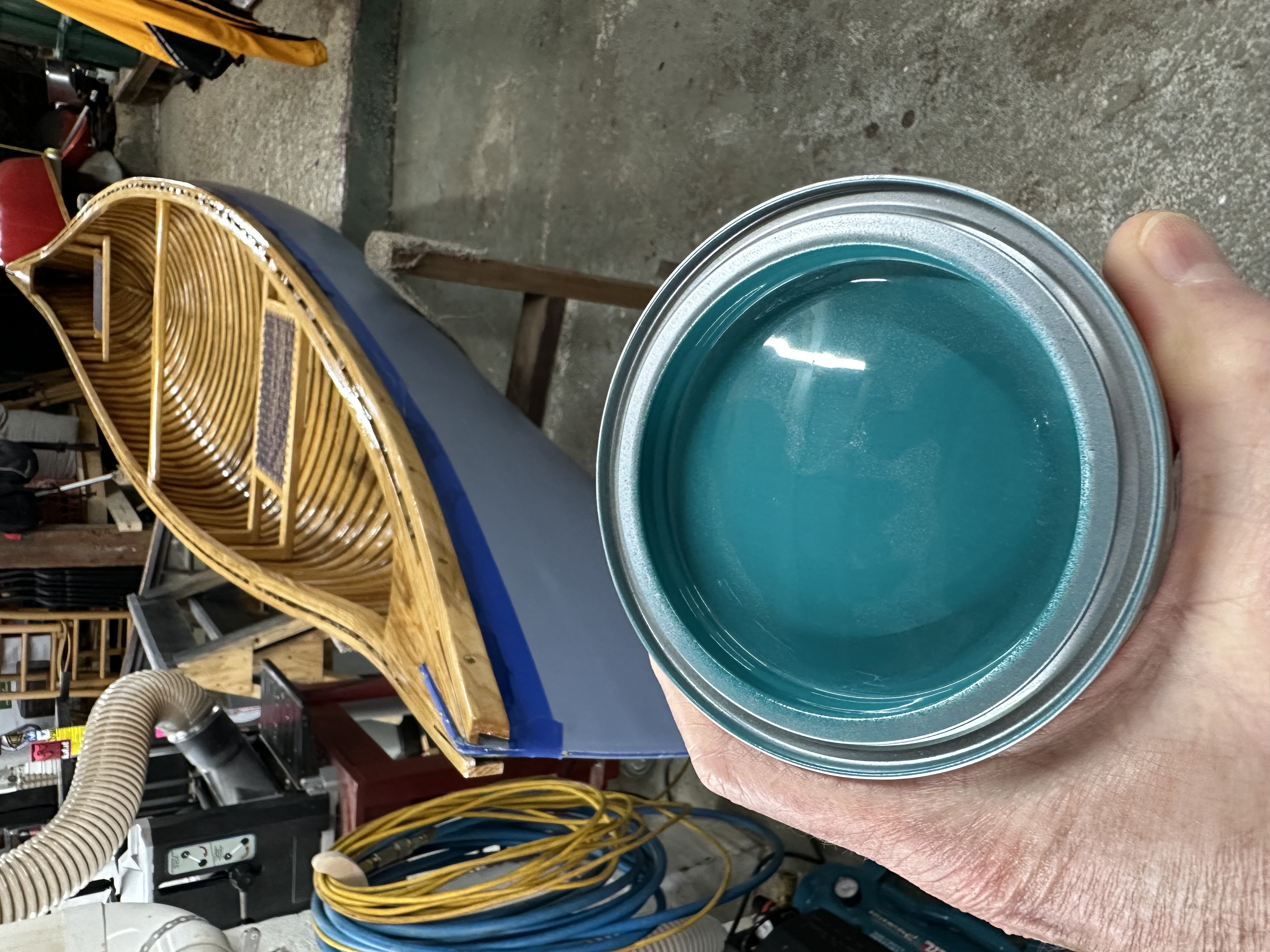
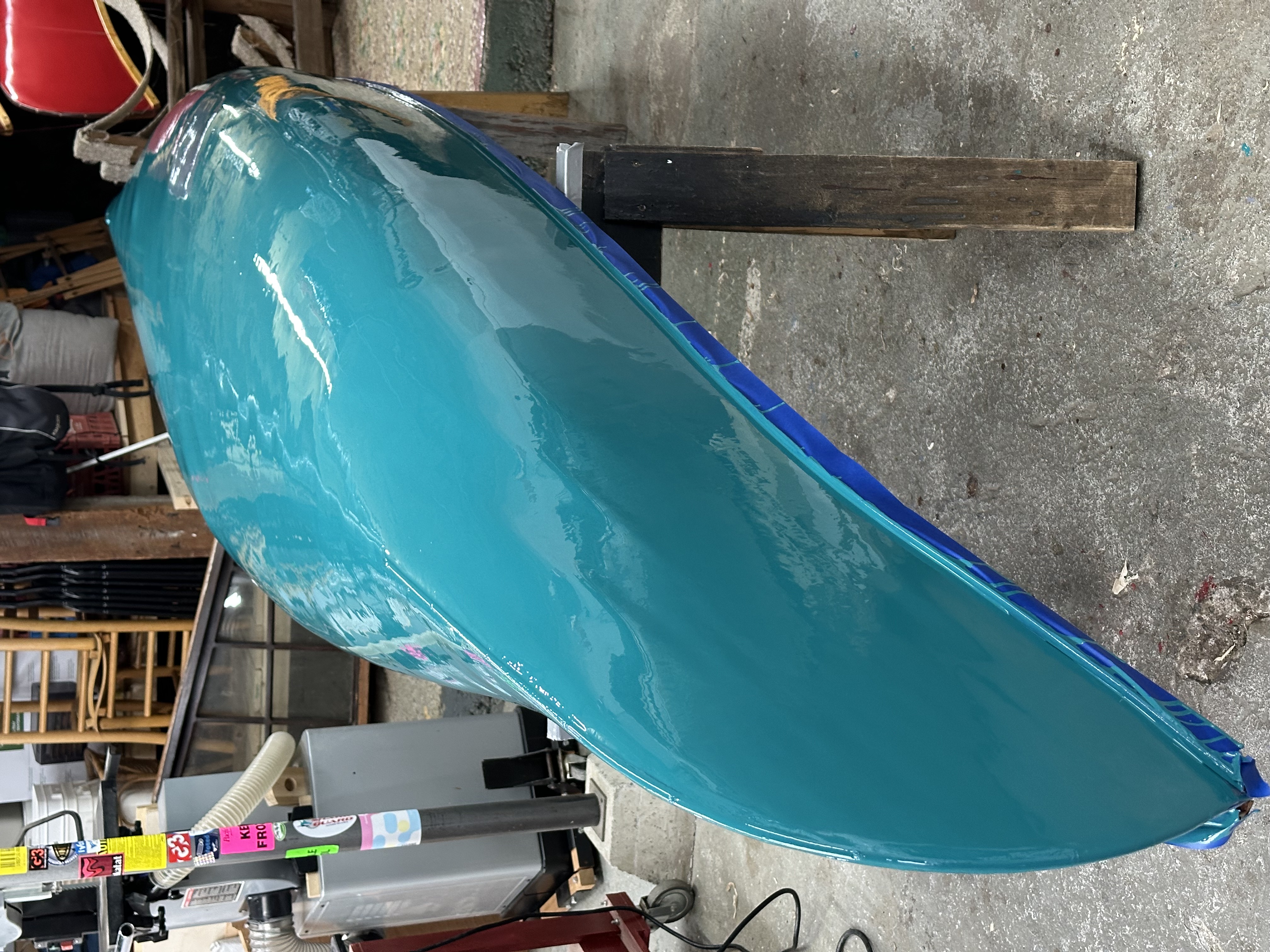
Canoe colour is tricky. For some folks the only correct colour is red. Chestnuts came in red, naturally, but they also came in a nice looking grey green colour. So there was at least one conventional alternative. There are, of course other reckless choices. Our 16’ chestnut Pal is painted a nice plum colour. We think it looks good, but I have heard friends say quietly that’s just not right …. Blue might even be more contentious, but that’s where we landed: Epifanes turkish blue. Coincidently, it’s very similar to the colour of the Kubbe-i-Hadra or “Green Dome” at the Mevlâna Museum in Konya. The Kubbe-i-Hadra is the mausoleum of Jalal ad-Din Muhammad Rumi. We visited that site while on our recent visit to Turkiye.
And Done
It took a few coats of paint to get things right, and then a bit of touch-up to the varnish on the gunwales. But by late January the work was done and on a warm-ish day in early February Kim and I took the boat to nearby Thetis Lake and got that canoe back onto the water. It was wonderful.