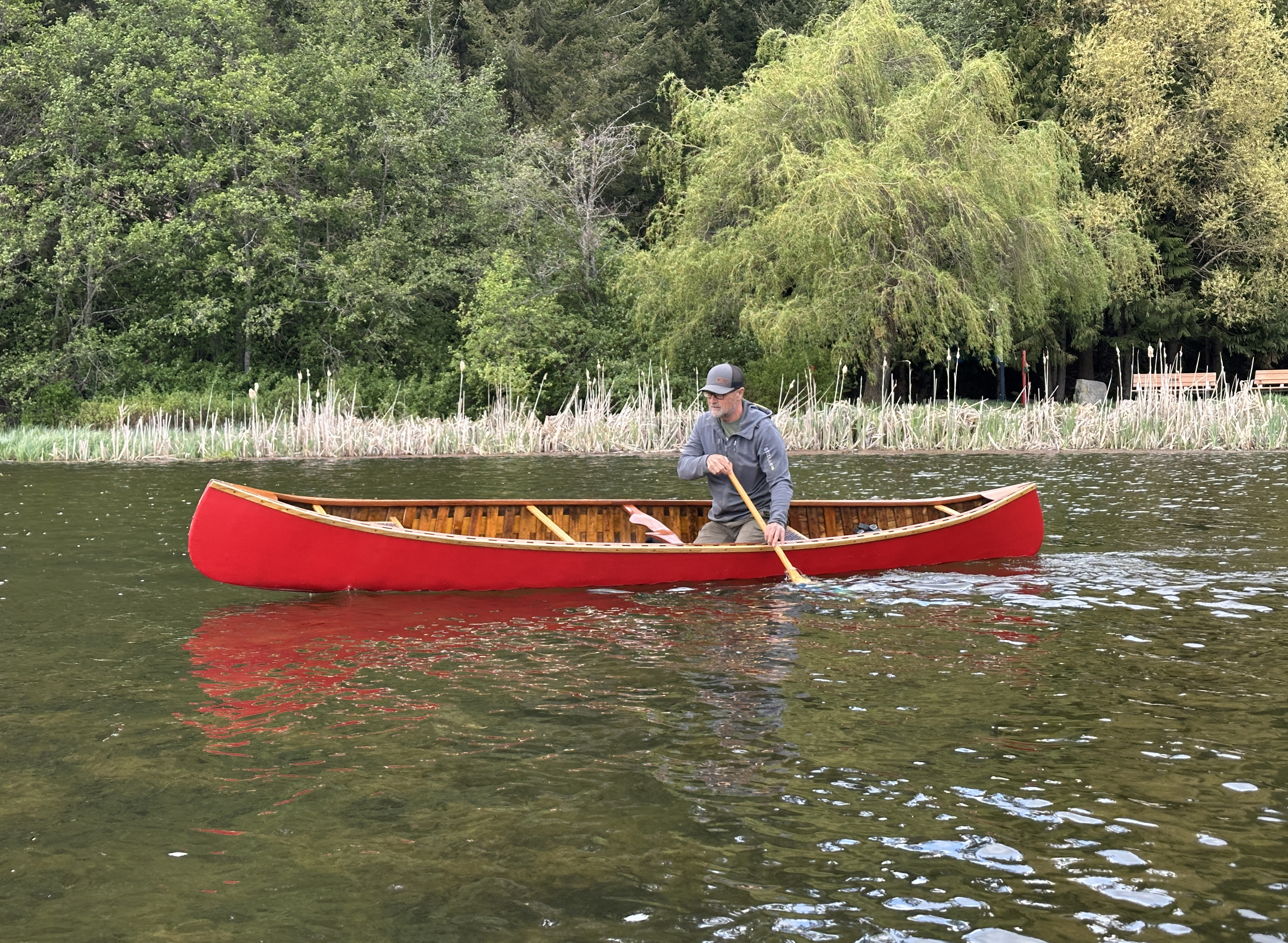
Neegik is a wood-canvas canoe. Made sometime around 1970 by Les Canots Tremblay Ltee in St Felicien Quebec. It’s the 15 foot Chebougamau model. Neegik is the trusted companion of my old friend Leslie.
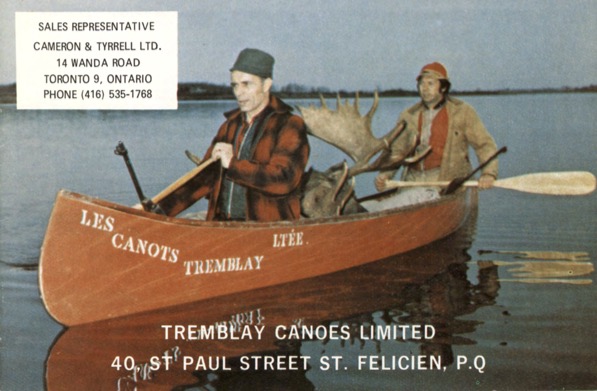
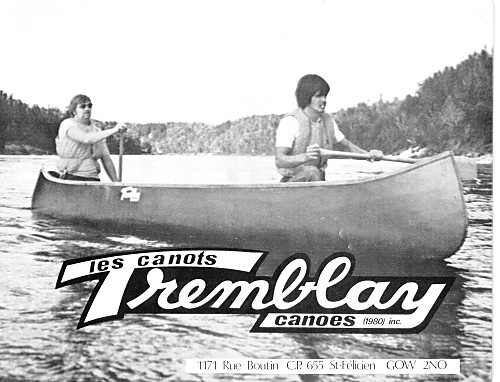
A couple of years ago Leslie wrote a wonderful essay honouring his beloved canoe and canoes in general. He writes that Neegik saw a lot of use in the 1970s at the hands of enthusiastic teenagers and in the late 1980s a crafty friend led an amateurish restoration of the boat. All true: that crafty friend would be me.
It was 1987, a decade and a half of hard use and adventure left the boat in rough shape. Many broken ribs and planks, and a vinyl-canvas skin that was faded and leaking. I had worked on a couple of canoes before Neegik but a proper restoration of this boat was way beyond my skills, though I was only dimly aware of that at the time. My repair job left Neegik with a weirdly misshapen keel line and a hull rounder and lumpier than before. But with fresh canvas it could still float and in the following years Neegik and Leslie went on further adventures.
For a long time Neegik stayed at the family cottage in Haliburton. But when the cottage was sold Leslie brought Neegik home to Whistler. On a recent visit we talked about the possibility of another restoration. At a minimum it was time for new canvas and while I knew that I could not return it to its original shape perhaps I could smooth out some of the bumps and bruises.
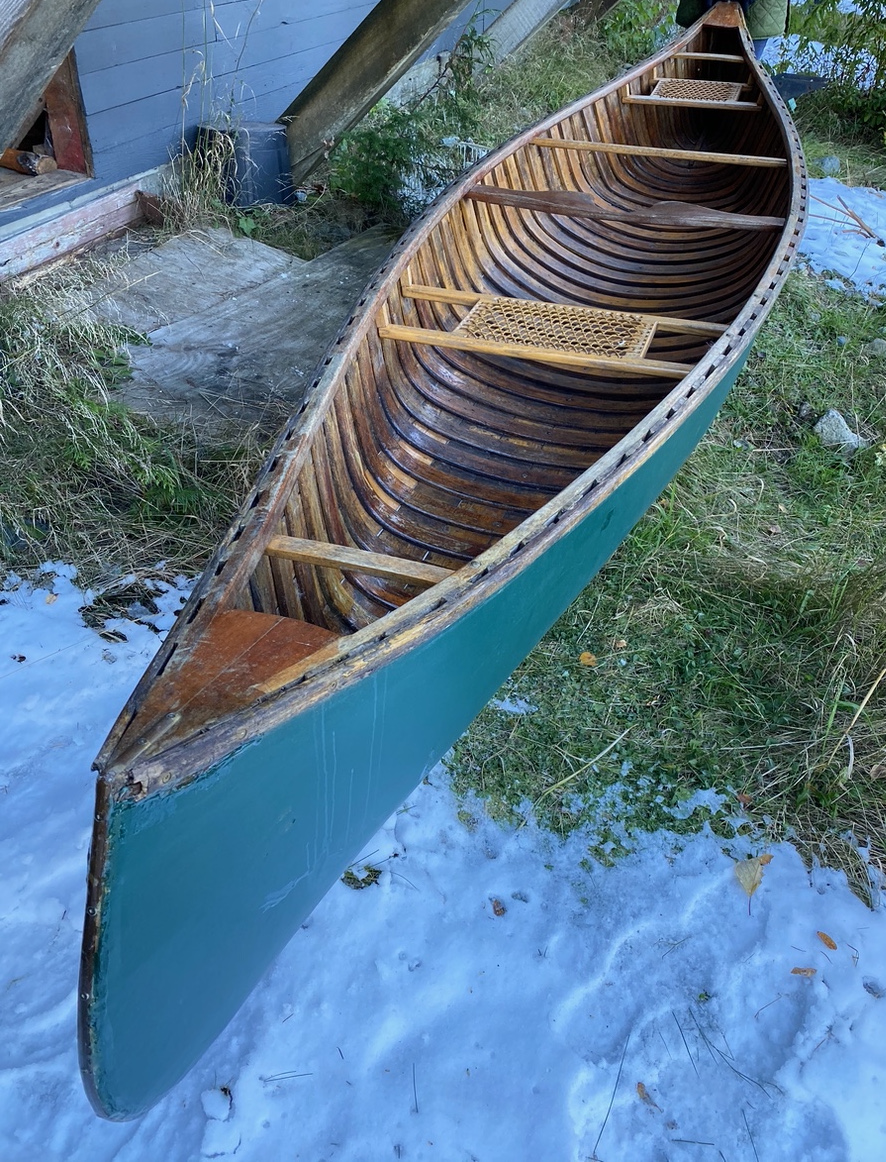
In early summer 2025 Neegik arrived in my shop for the second time. Different shop, different circumstances. The earlier restoration was on my mind, but I had more history with that boat. My first whitewater experience was in Neegik, paddling with Leslie. We were in the Blue Chute rapid on the French River. I was 16 years old. Paddling canoes in whitewater is an important part of my life, and that all started with Neegik. But this is a woodworking blog…
The Inwale
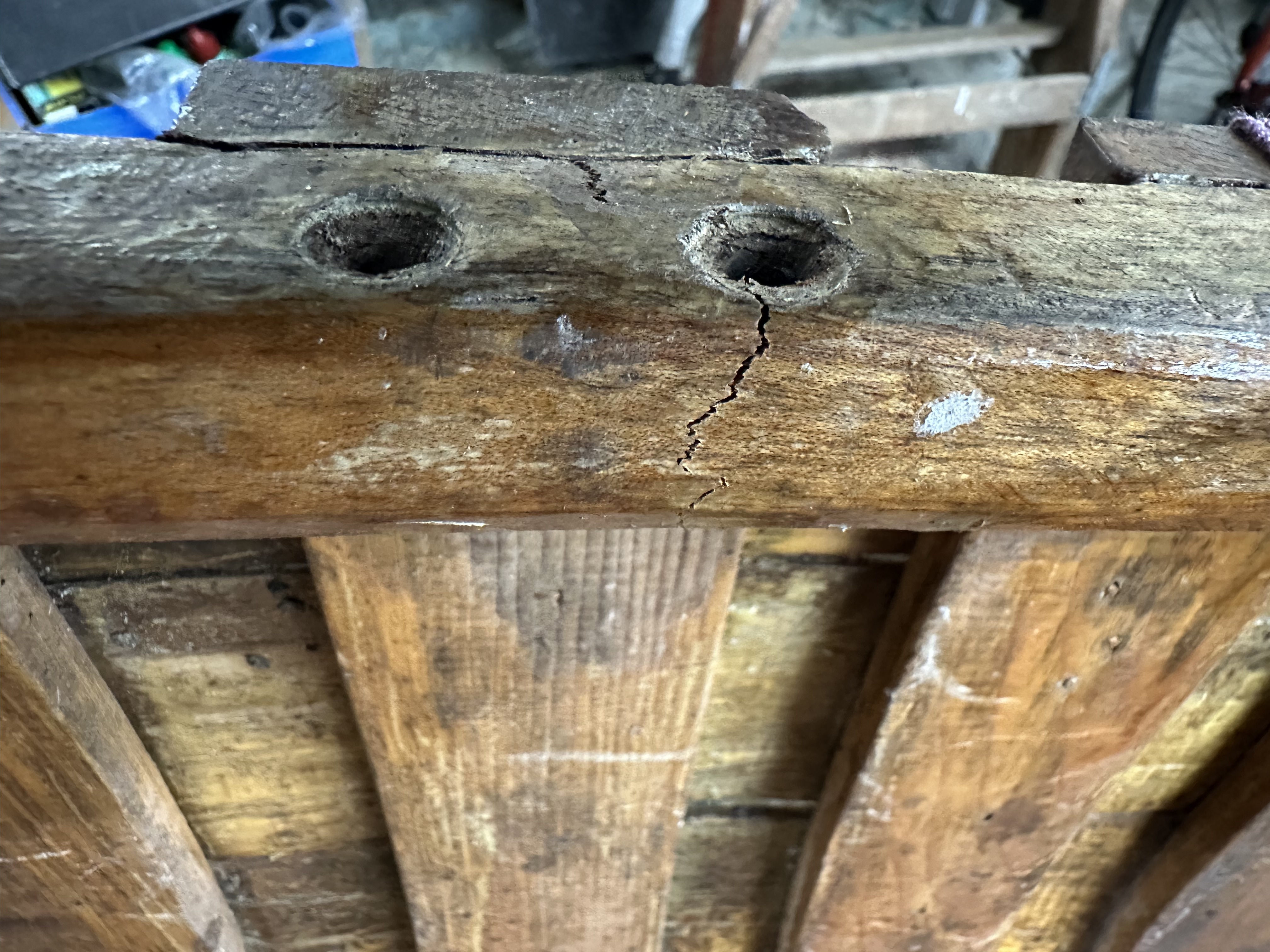
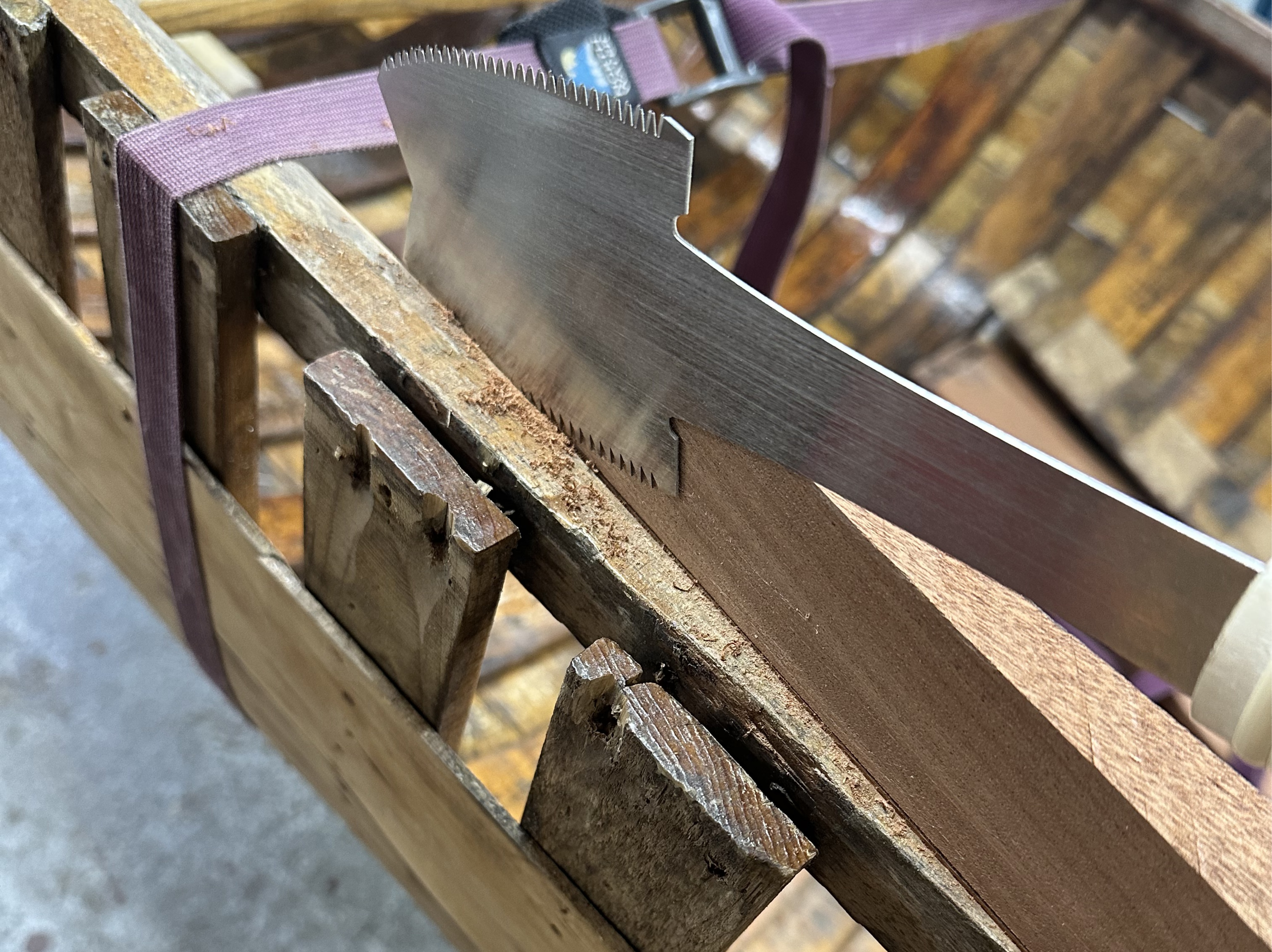
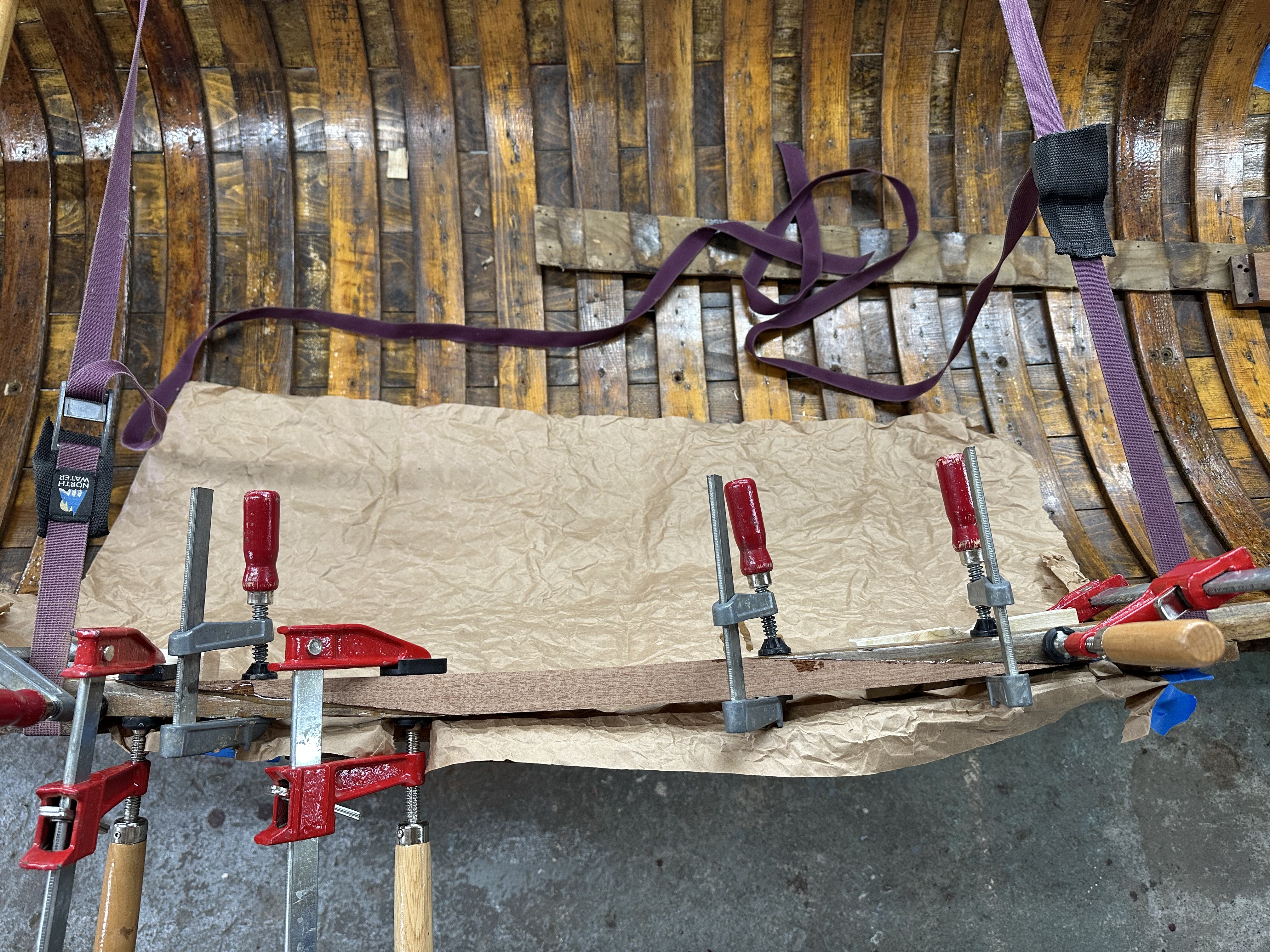
Not surprisingly once the old canvas came off close inspection revealed damage that I had not seen earlier. The biggest discovery was that one of the inwales was cracked at the yoke. That required me to cut out the damaged section and glue in a patch. Scarf joints are the normal way to deal with these kind of repairs, but it was a new thing for me so I was a bit nervous making those first cuts.
Yoke and Seats
Neegik has a beautiful mahogany yoke, Patching the inwale (also mahogany) had implications for the yoke. So I wound up cutting patches into the yoke to allow for new hardware.
Seats are often the first thing to fail in a boat like this. The mortise and tenon joints fail, and cane or babiche webbing fall apart. While I try to follow most traditional conventions when restoring a canoe the seats get a more modern treatment: domino joints held together with marine epoxy and seats made of woven climbing accessory cord.
Ribs and Planks
By 1987 Neegik had many broken ribs and I attempted to replace them. I did not have much experience with steam-bending wood and my early repairs to Neegik tell that story. The replacement ribs were not pliable enough to match the original shape of the boat. So that surgery left Neegik with a lumpy keel line and a flared profile. Not pretty, but still functional.
It would have been a massive job to reverse and correct those earlier repairs. So I was resigned to leave most of that work in place. But there was one rib from the 1980s that I just could not stand, and another rib that I should have replaced earlier but didn’t. So I replaced two ribs. Proper steam bending equipment and a bit of hard-won experience made that an easier job this time around.
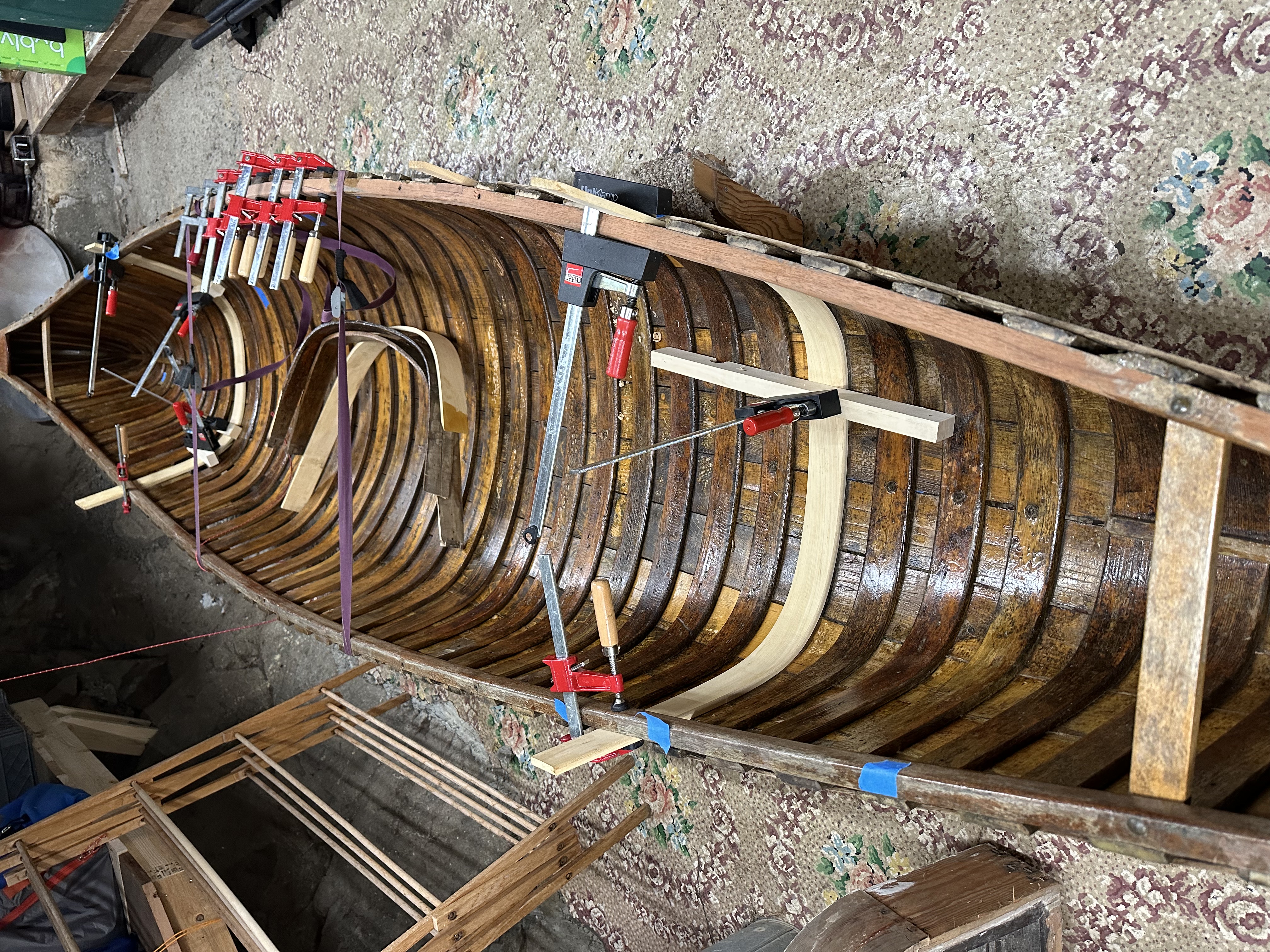
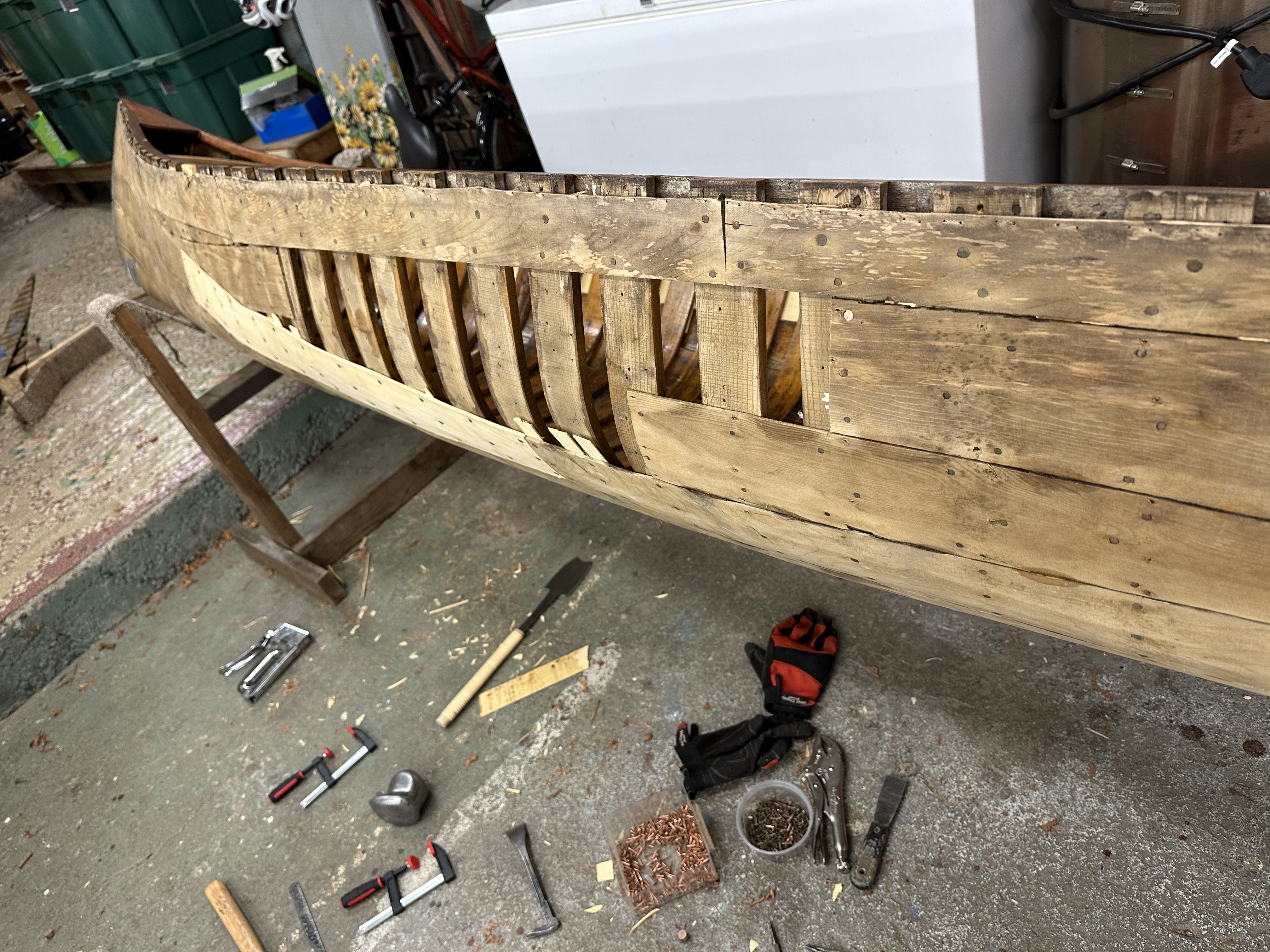
There was a fair amount of damaged planking to replace and that created the opportunity to smooth out some of the lumps and bumps in the ribs. Neegik’s original ribs and planks are white cedar, as were the 1987 replacement parts. White cedar is hard to find in Ontario, where it grows, and almost impossible to source in BC. (Years ago I flew home from an Ontario visit with a slab of white cedar as checked luggage). As luck would have it my friend Francis had recently given me a beautiful clear piece of yellow cedar. Despite the similar names yellow cedar and white cedar are completely different species. One grows in eastern swamps the other grows here on the west coast. And neither are true cedars. But they both have similar characteristics. So I milled Neegik’s new ribs and planks from yellow cedar. Somehow appropriate now that Neegik lives on the west coast to have repairs from west coast wood.
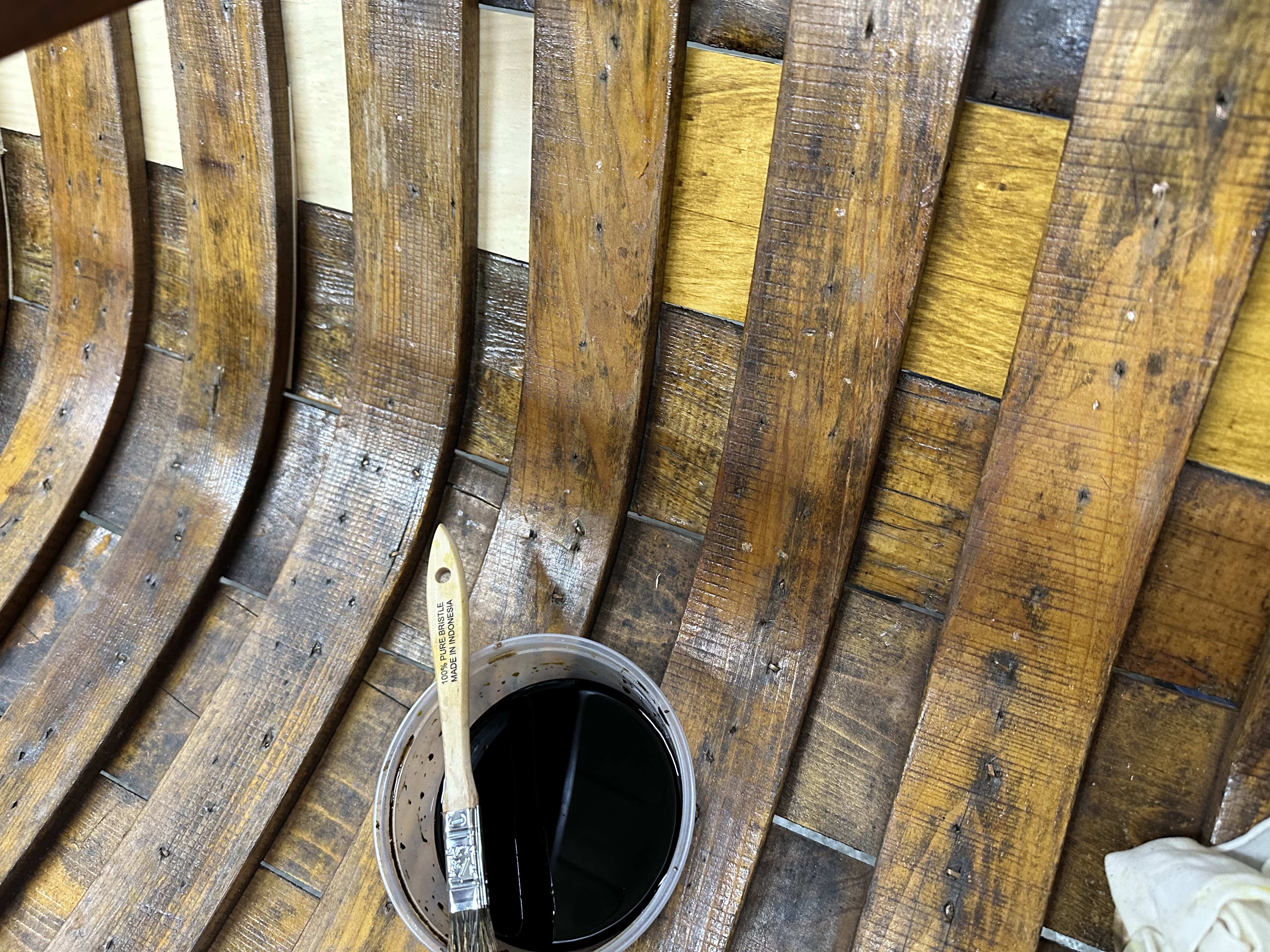
Hard living and poor storage left Neegik with an interesting patina on its ribs and planks. After some discussion we decided not to strip the old finish. It was an interesting exercise to match the new wood to the old. But with some aniline dye I was able to the get the new ribs and planks to almost match the old wood.
Canvas, Fill and Paint
Tremblay canoes were notorious for their vinyl-coated canvas skin. Called Verolite, it was a 1970s invention that mostly failed to catch on with other canoe builders. Normally wood canvas canoes have canvas stretched over the wood, filler applied to the canvas, and primer and paint over the filler. Plus a bunch of sanding between filler, primer and paint. Using verolite meant that you could skip the filling and painting. But the stuff never really looked right and made it tricky to properly set stem bands and keel in place. I managed to find some of that vinyl canvas for the 1980s restoration and that was the material that I peeled of Neegik in 2025. This time though, we were going with the more conventional approach.
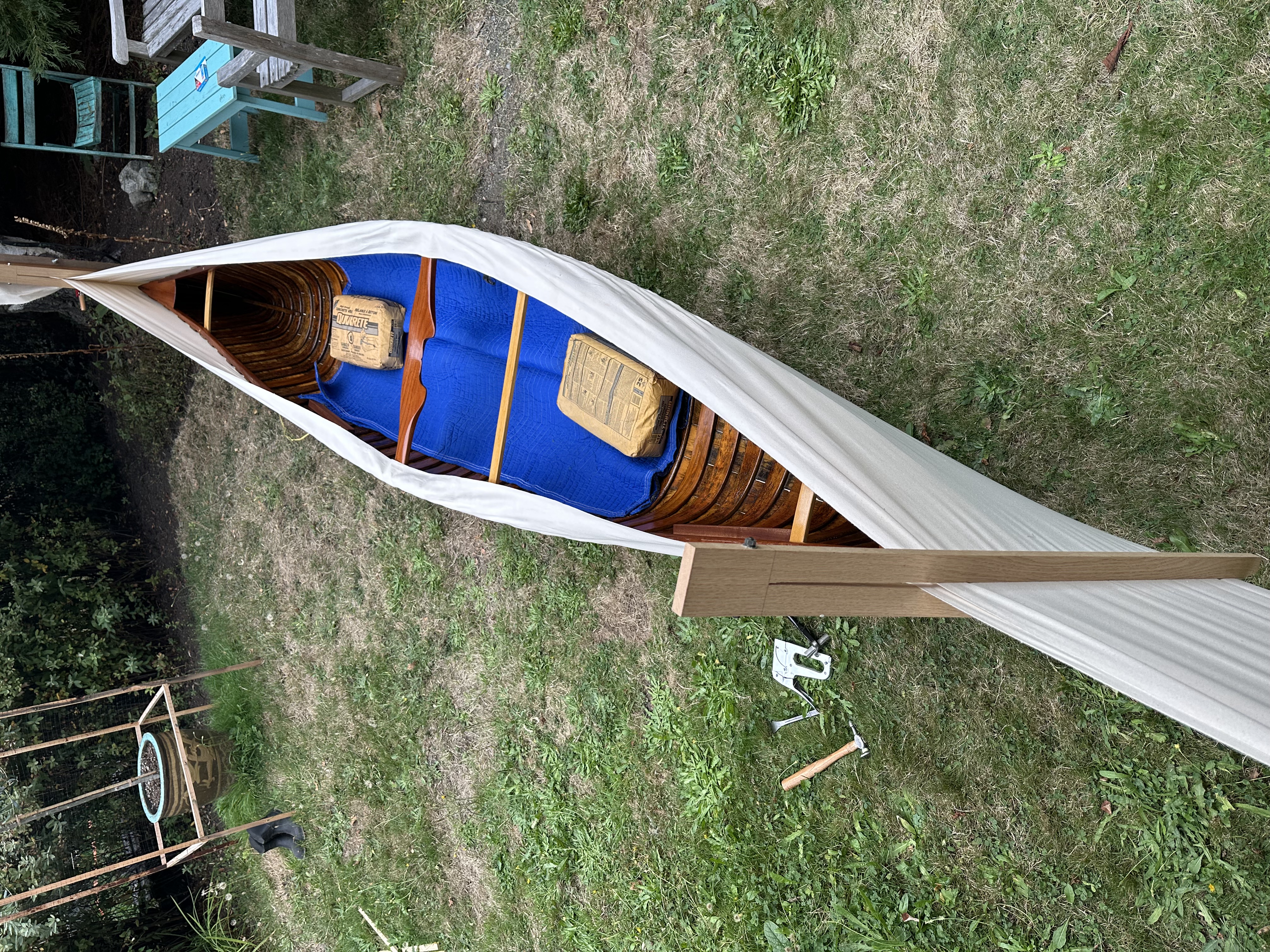
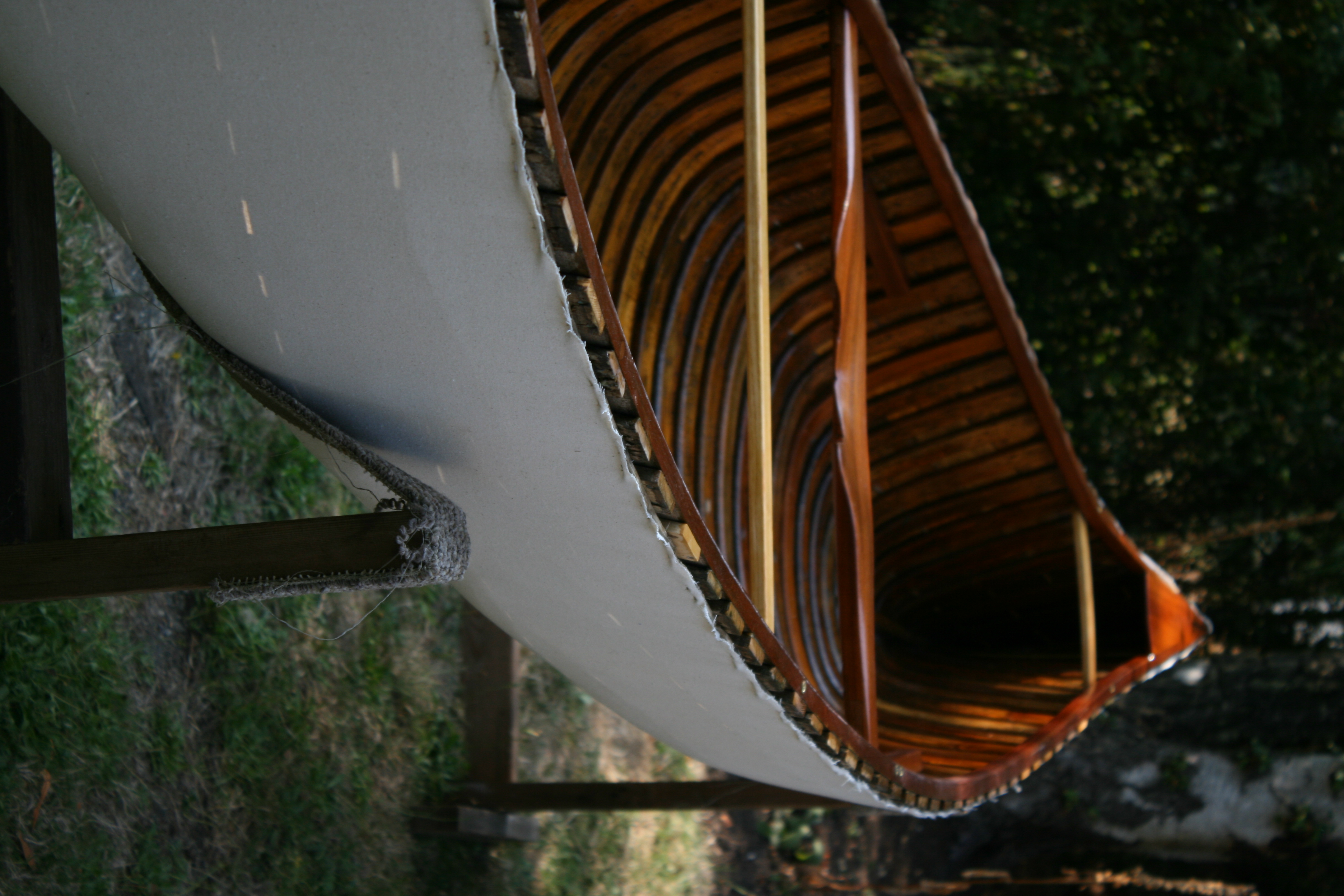
Right: Kim took this much nicer picture of Neegik resting comfortably after the ordeal.
In late August I stretched canvas onto the boat and a week later I applied the filler. I’ve used latex based fillers in the past but have never really liked the process or results. This time I used a more conventional approach. Truly old school filler used a mix of oil, enamel and white lead. These days silica is typically used instead of lead. That’s what I used. The big drawback to the oil based filler is that it takes a month or more to fully cure. But Kim and I were off to Turkiye for October so the timing worked out perfectly.
It took a bit of time and care to get the filler sanded out evenly but the oil based filler was great to work with. And when dry it was much tougher than the latex based filler.
In 1987 the only verolite that I could find was forest green. But originally Neegik was red. As I was preparing the boat for canvassing I came across some fragments of the original canvas, stuff that I had missed in the 1980s restoration. I was happy to find marine enamel that matched the original colour. Classic Bill Mason Red Canoe Red! For some folks that is the only proper colour for a canoe.
As the primer and paint went on so did the keel, stem bands and outwales. In 1987 I was able to keep Neegik’s original mahogany outwales but there was not much left of them now. So I milled new outwales from ash and steam bend them into place. Fortunately the keel and stem bands were still in good shape and could be reused. By mid-December Neegik was all back in one piece and and the paint and varnish were done.
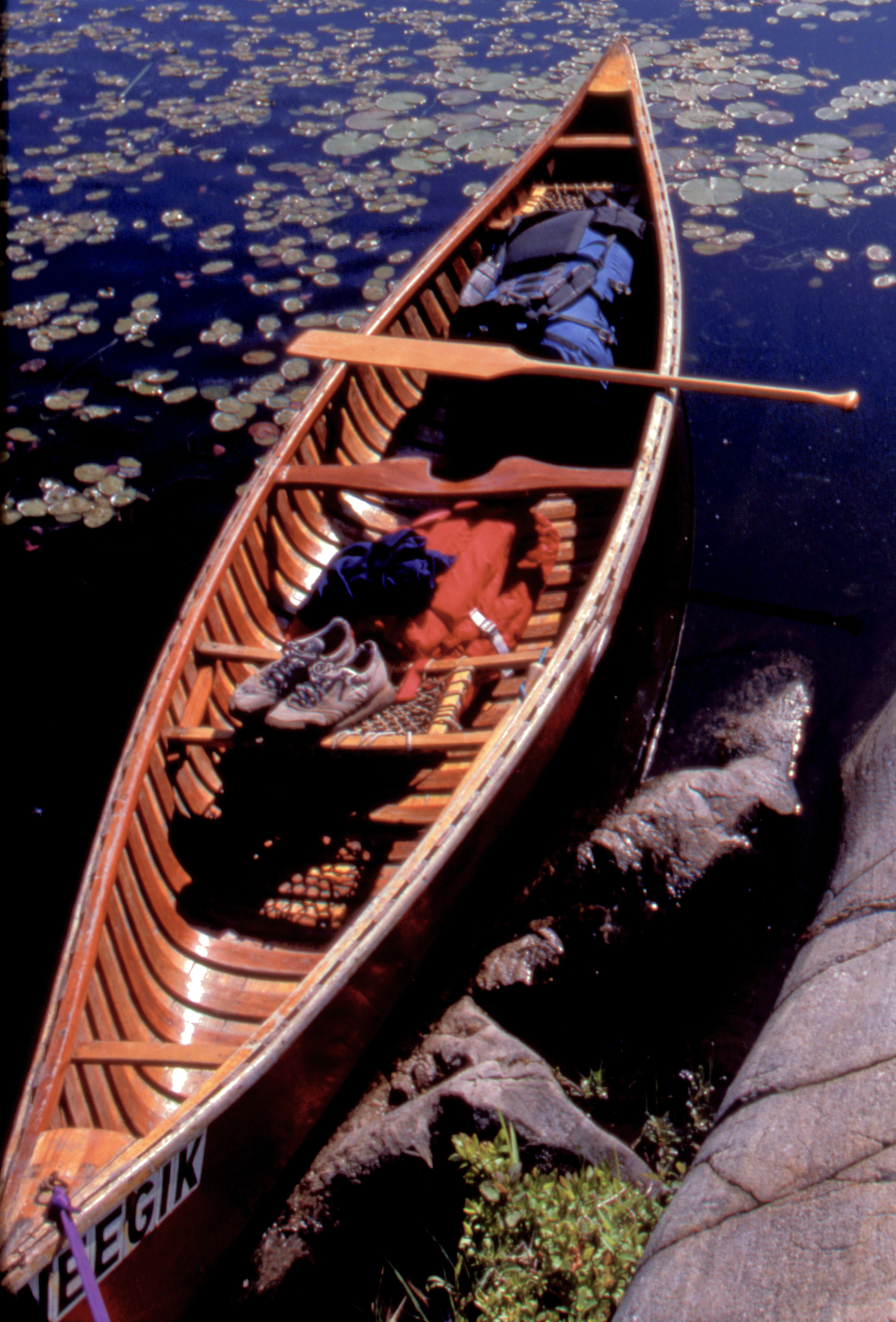
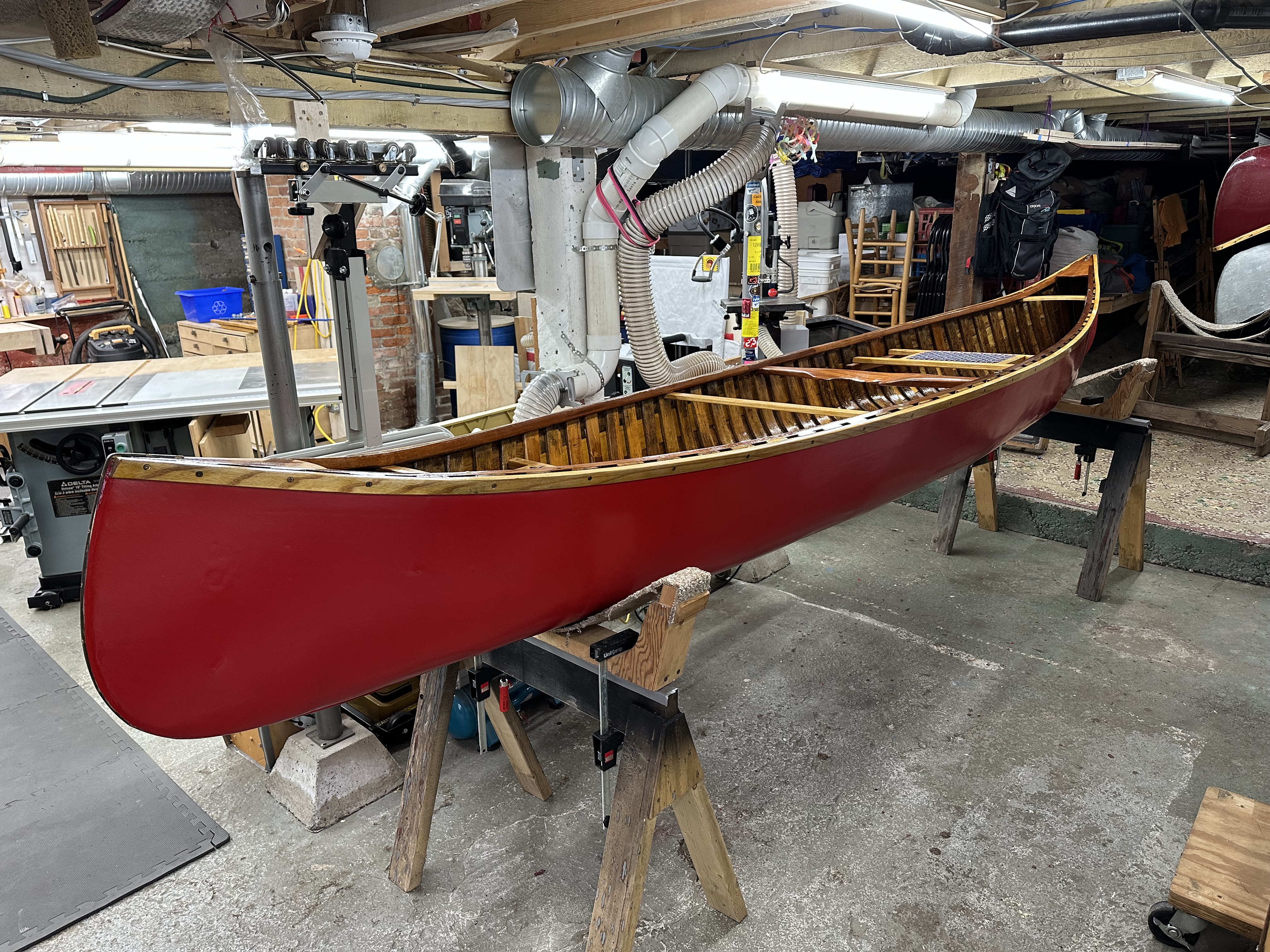
The only thing left to do was get back on the water, but that had to wait until spring. In mid-May I returned Neegik back home to Whistler. On a windy afternoon Leslie and I got Neegik back on the waters of Alpha Lake.