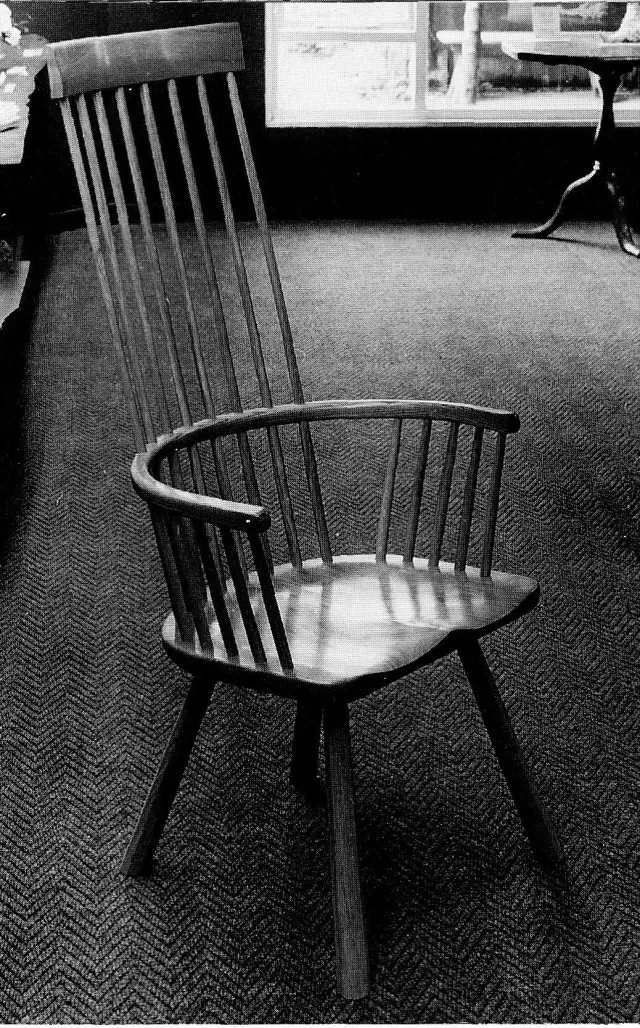
John Brown was the godfather of welsh stick chairs. His primitive chairs had arm rails made from three (sometimes five!) pieces: two sides cut into curves from flat stock, butt-joined in the middle and supported by a doubler across the back of the chair. So far I’ve made two chairs with this form.
JB’s cardigan chairs had lighter, narrower arms. One piece of steam-bent wood wrapped all around the chair with no need for a doubler. I like this look and it was what I was trying to achieve with my first welsh chair. Though for that chair I cheated a bit and butt-joined the two sides without using a doubler. Look closely at the pictures in that post, you can see the seam in the middle of the arm rail. Current owners of the chair, our neighbours, report that it’s holding up just fine (probably because there is a floating tenon holding the joint together). Just the same, it’s time to get a bit closer to the original form and methods.
I recently got some elm through our local wood rescue program. Elm is great for steam-bending. This wood was also air-dried. Kiln dried wood will not steam-bend.
Needless to say, there’s another welsh stick chair underway down in the shop. With luck that chair will show up in the next blog post. This post is about the process of steam bending the arms.
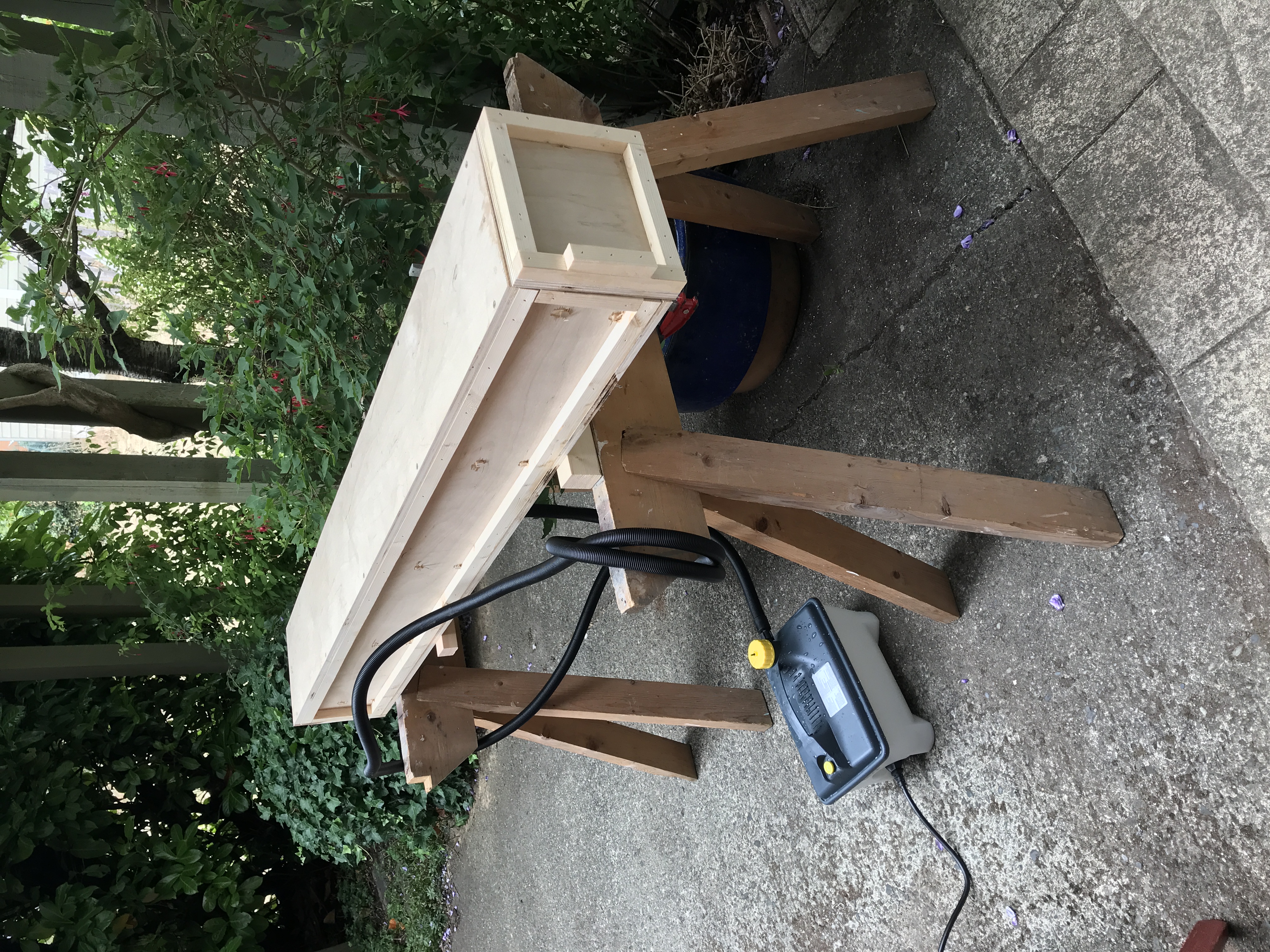
First step is to build the steam box and purchase the steam-generator.
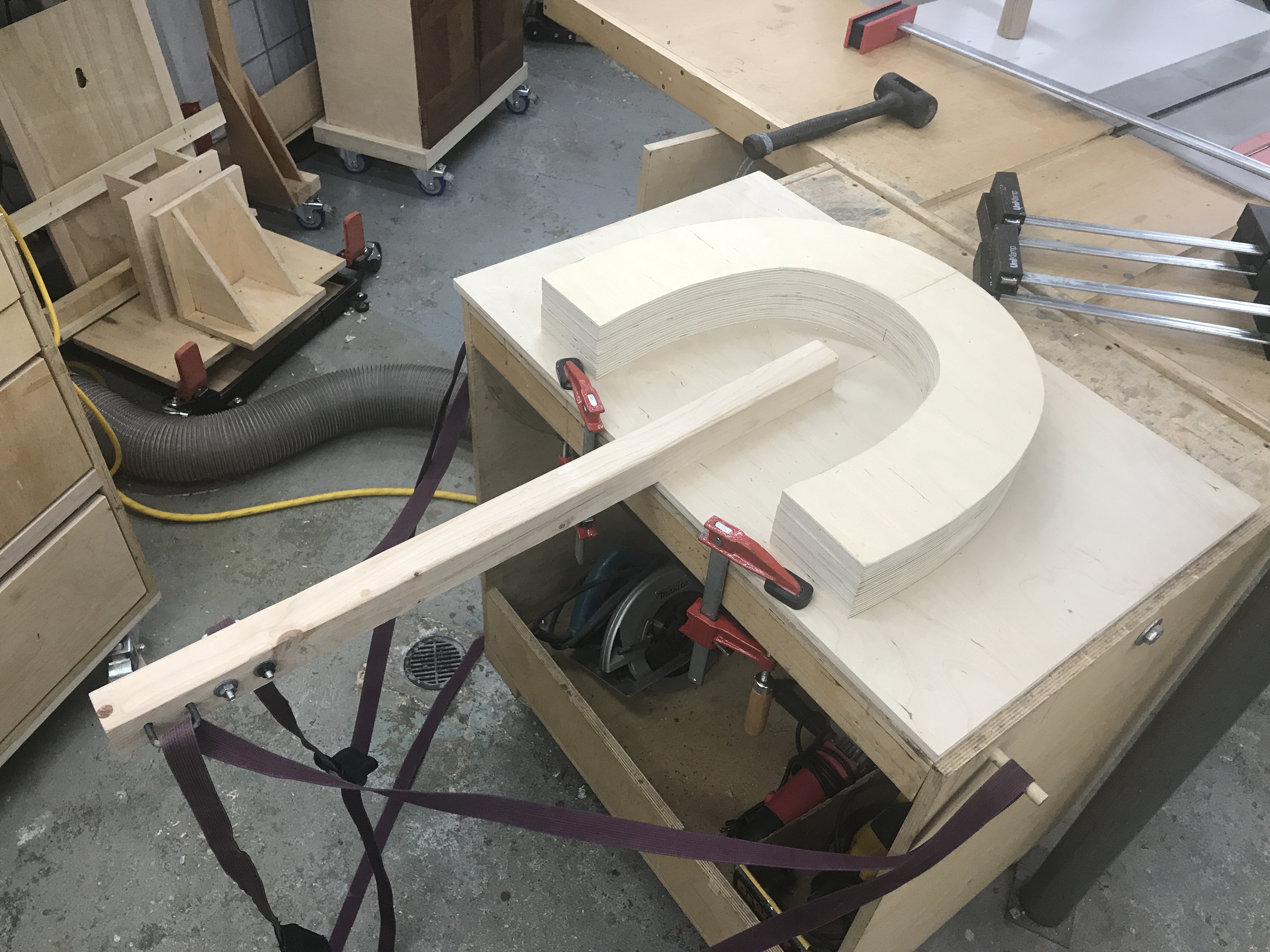
Next step is to build the bending form.
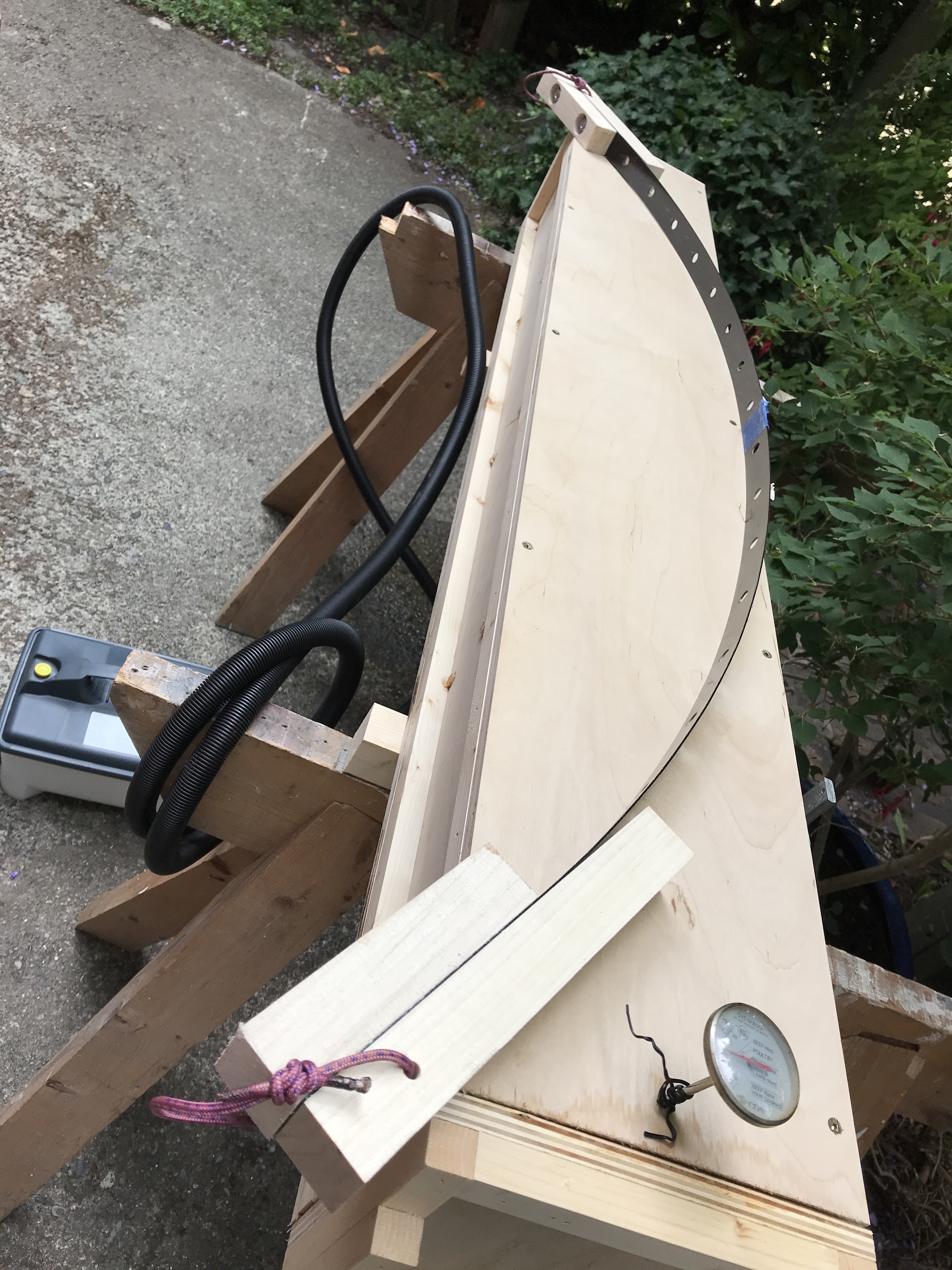
Finally we need a steel band with wood stops. It’s the thing that stabilizes the wood as it bends around the form.
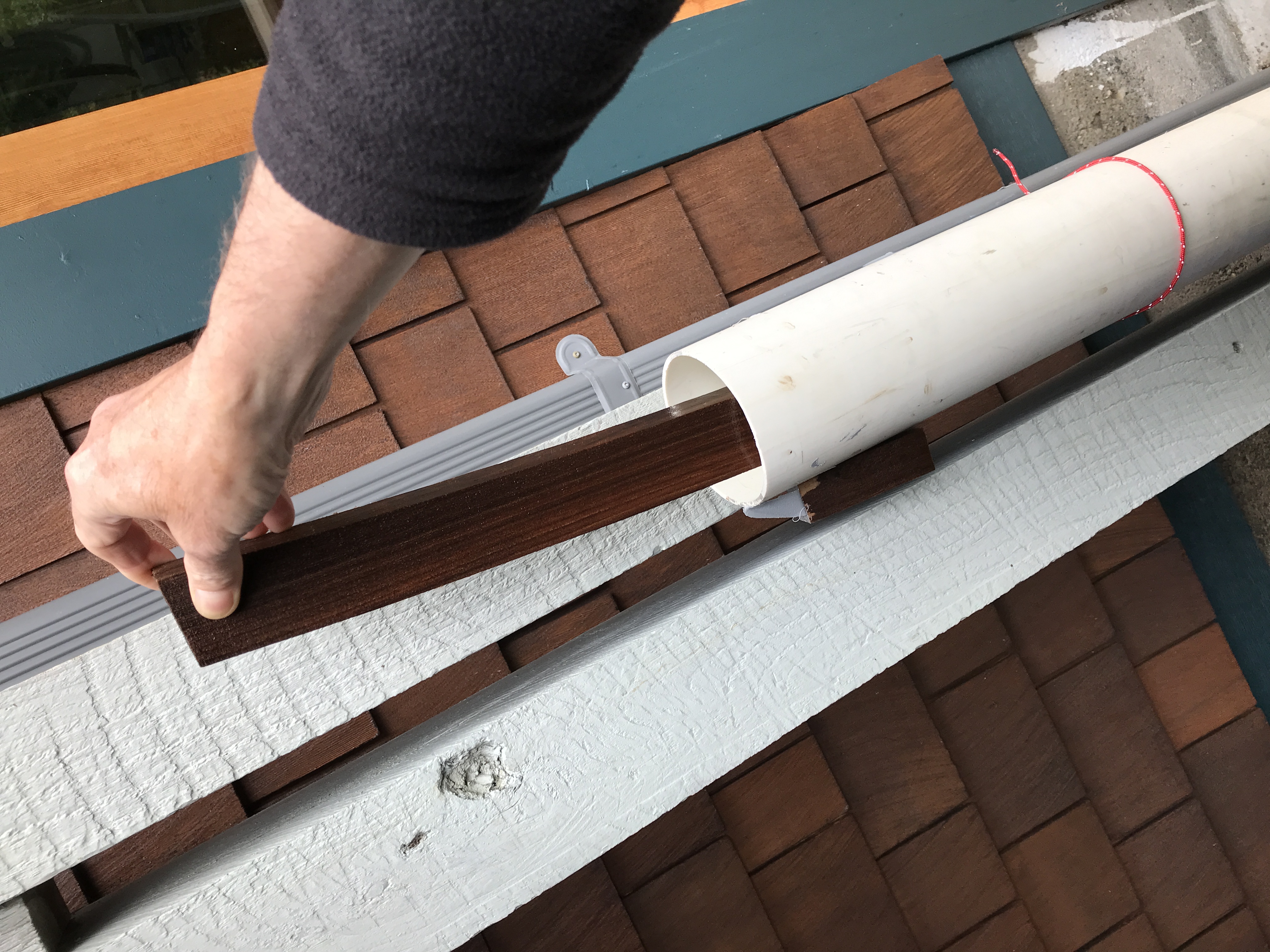
The elm was pretty dry, so I soaked it for a week ahead of time.
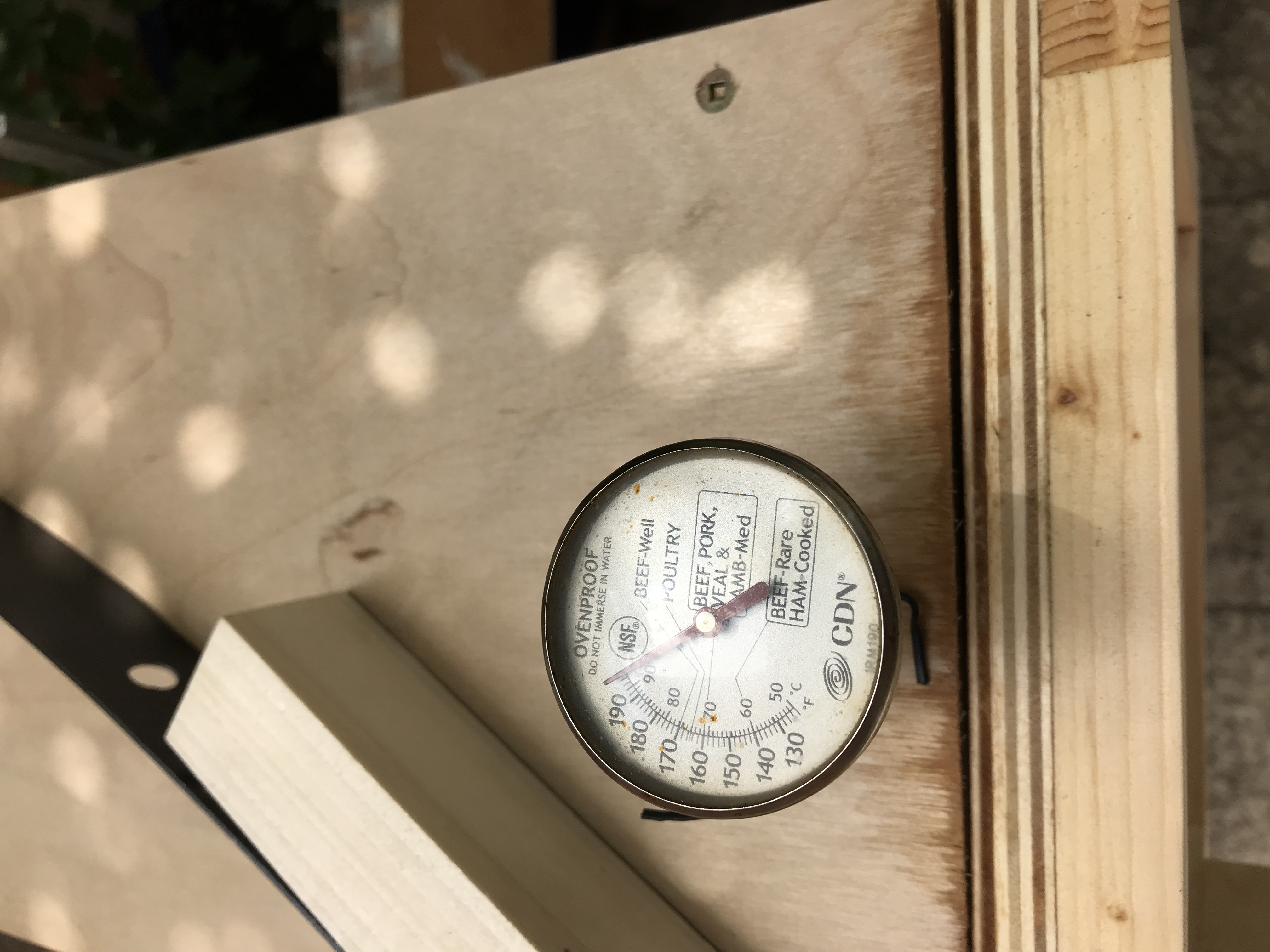
Then the wood goes into the steam box for two hours at just under 100C.
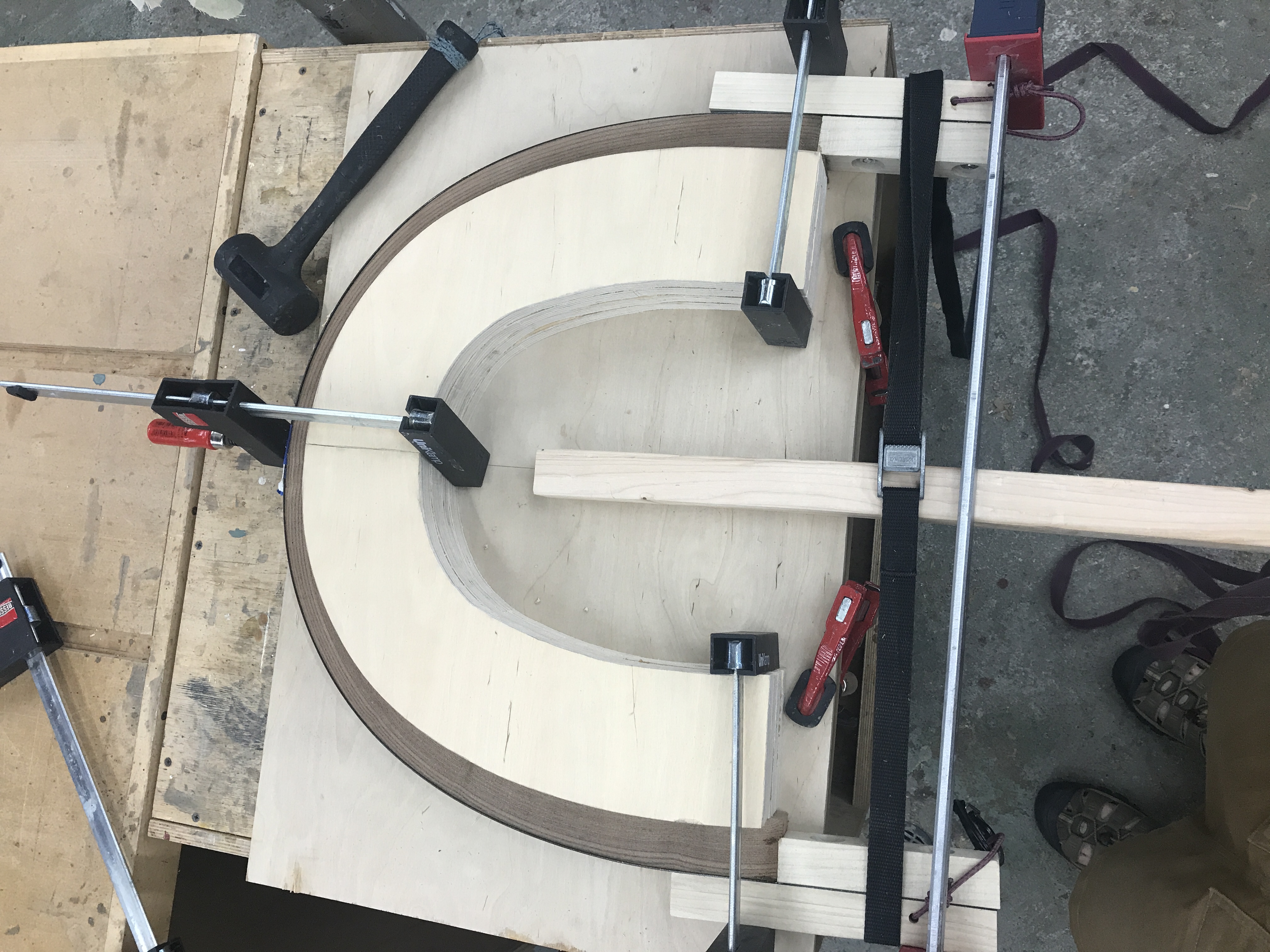
Then its onto the form. Careful, that wood is hot. The center gets clamped into place and the ends of the steel band get pulled to wrap the wood around the form. It takes clamps, straps and a bit of effort, but the wood is pretty flexible in the first minutes after it comes out of the steam box.
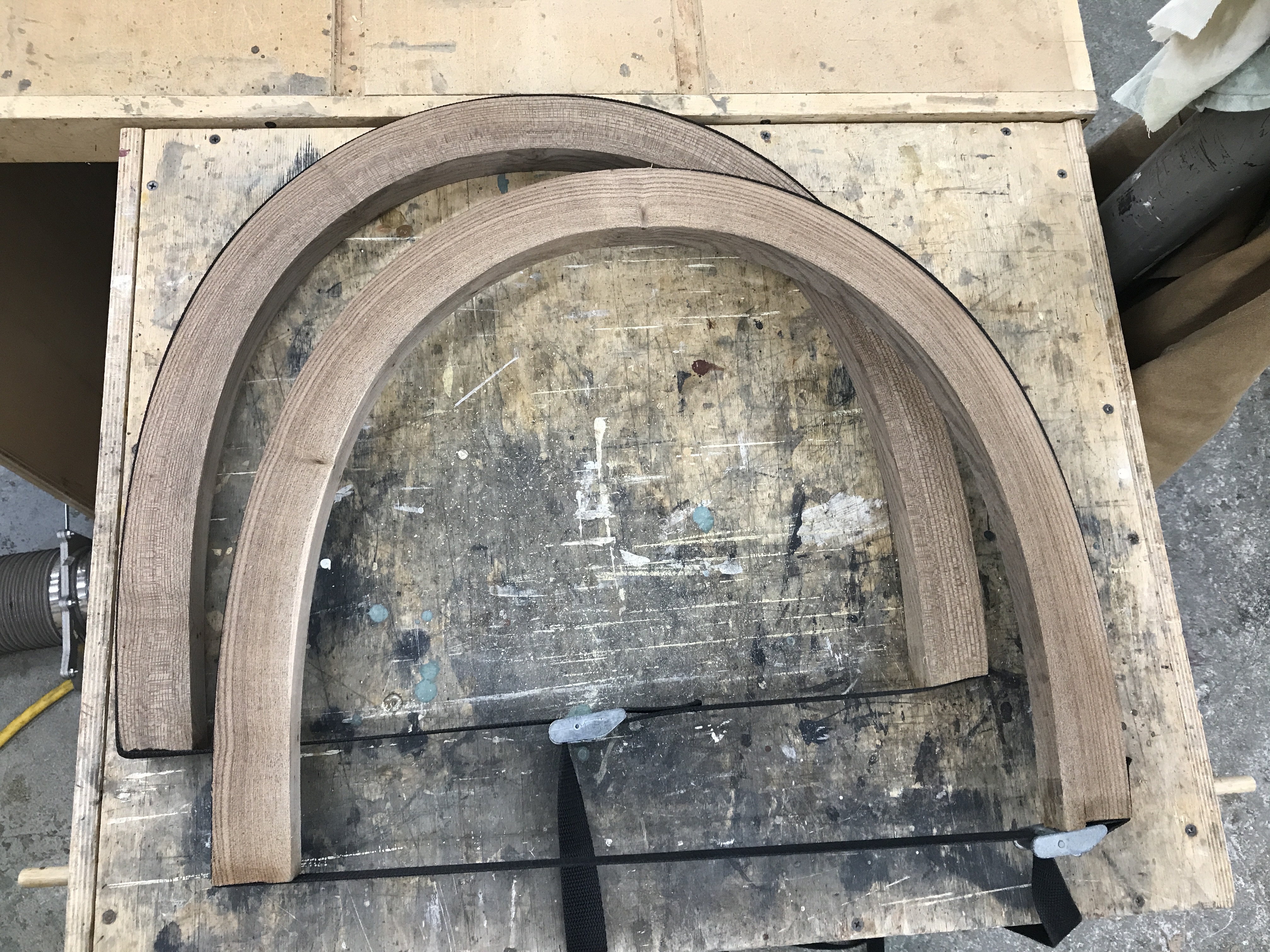
When the wood has cooled down it can be pulled off the form. It gets stabilized with a strap and left to dry for a couple of weeks. I had enough wood for two arm rails and expected that I might need a spare. But both of them seemed to turn out just fine.
Next post will describe the rest of the chair.